

Is Expensive Balsamic Vinegar Worth It?
Last Updated: October 28, 2026
Quick Summary
Expensive balsamic vinegar is worth it only when you buy the right tier: traditional DOP or IGP bottles made from cooked grape must and aged in wooden barrels deliver density and complexity that cheap blends cannot. A $26 IGP bottle costs about 34 cents per teaspoon, so a deliberate finishing drizzle is money well spent.
- DOP is the strictest tier, IGP is regulated but looser, and commercial balsamic carries no certification at all.
- Cooked grape must should lead the ingredient list; wine vinegar, caramel color, and glucose syrup signal a commercial blend.
- Tilt the bottle: genuine aged balsamic moves slowly and coats the glass rather than pooling thin.
- A $100 traditional DOP bottle runs about $1.30 per teaspoon, but a finishing drizzle is one teaspoon, not a pour.
- Store opened bottles in a cool, dark cupboard, tightly sealed, and buy small bottles if you use finishing vinegar slowly.
Table of Contents
- What Expensive Balsamic Vinegar Actually Is
- Price Tiers Compared: What $8, $26, and $100+ Bottles Deliver
- How to Tell If Balsamic Vinegar Is Real
- The Best Balsamic Vinegar Under $20 (and When to Spend More)
- Cost Per Serving: The Math Behind the Splurge
- How to Use Aged Balsamic Vinegar in Everyday Cooking
- Which Bottle Fits Your Kitchen: A Buying Decision Framework
- Taste the Difference Yourself at The Oil & Vinegar Bar
- Frequently Asked Questions
What Expensive Balsamic Vinegar Actually Is
Expensive balsamic vinegar is a grape-must condiment aged for years in wooden barrels, and whether it earns its price depends entirely on which category you're buying. The honest answer: some expensive balsamic is worth every dollar, and some is a marketing label on vinegar.
Here's what most guides get wrong. They treat "balsamic vinegar" as one product with a sliding price scale. It isn't. It's three different products sharing a name, and only one of them is aged the way the name implies.
Traditional balsamic vinegar is cooked grape must, aged in a series of wooden barrels for a minimum period set by Italian law, with nothing added. Balsamic vinegar of Modena is a protected category with its own production rules. Commercial balsamic is wine vinegar with grape must, coloring, and sweetener, often sold for under $10. Same shelf, wildly different contents.
Traditional DOP vs. IGP vs. Commercial Balsamic
DOP stands for Protected Designation of Origin, the strictest tier. IGP stands for Protected Geographical Indication, a broader category with looser aging rules. Commercial balsamic carries no certification at all.
- DOP: tightest rules, longest aging, highest price
- IGP: regulated but flexible, mid-range price
- Commercial: no aging requirement, lowest price
Why Barrel Aging and Grape Must Drive the Price Up
Grape must is the whole game. Making it means cooking fresh grapes down to a concentrate, which takes time, fuel, and a lot of fruit. Barrel aging adds years of storage and natural evaporation, so a producer loses volume every year a barrel sits. Those two costs, plus certification, explain most of the gap between an $8 bottle and a $100 one.
Price Tiers Compared: What $8, $26, and $100+ Bottles Deliver
The price on a balsamic bottle is a signal, not a guarantee. What separates tiers is a combination of ingredients, certification, aging time, and sensory density. Here is what each tier typically delivers, and how to verify it before you pay.
| Tier | Typical Contents | Certification to Look For | Texture and Flavor | Best Use |
|---|---|---|---|---|
| Under $10 | Wine vinegar, grape must, caramel color, sweetener | None required | Thin, sharp, often cloying | Marinades, heavy dressings, cooking |
| $15-$30 | Cooked grape must leading the ingredient list, wine vinegar | IGP seal if Modena is claimed | Syrupy, coating, balanced sweet-tart | Dressings, glazes, drizzles |
| $50-$100+ | Long-aged cooked grape must, no additives | DOP seal for traditional | Dense, almost pourable, complex | Finishing, gifting, sipping |
The under-$10 bottle. Read the ingredient list first. If wine vinegar appears before grape must, or if caramel color and glucose syrup are present, you are buying a commercial blend. These bottles are fine for marinades where the vinegar is a background acid, but they lack the viscosity and sweetness that make aged balsamic distinctive. A common pattern is a thin body that pools rather than clings.
The $15-$30 bottle. This is where real grape must and regulated aging begin. An IGP seal means the product was made in the defined area under a production discipline, though aging rules are looser than DOP. Expect a syrupy texture that coats a spoon and a balance of sweetness and acidity. This tier is the workhorse for dressings, glazes, and everyday drizzles.
The $50-$100+ bottle. Traditional DOP balsamic is cooked grape must aged in a series of wooden barrels with nothing added. The result is dense, almost pourable, and complex enough to finish a dish by the drop. These bottles are not for cooking; they are for the table.
How to Verify the Tier Before You Pay
Price alone will not tell you which tier you are holding. Three checks catch most mismatches:
- Ingredient list: cooked grape must should be first. Wine vinegar, caramel color, and glucose syrup signal a commercial blend.
- Certification seal: a DOP or IGP stamp means the process was inspected. A bottle that prints "Modena" in large script without a seal is a red flag.
- Viscosity test: tilt the bottle. Genuine aged balsamic moves slowly and coats the glass. Thin, watery movement suggests a commercial product.
How to Tell If Balsamic Vinegar Is Real
Three checks catch most fakes:
Traditional Dark Balsamic of Modena →
- Ingredient list: cooked grape must should lead. Wine vinegar, caramel color, and glucose syrup signal a commercial blend.
- Certification seal: a DOP or IGP stamp means someone inspected the process.
- Viscosity: tilt the bottle. Genuine aged balsamic moves slowly and coats the glass.
The Best Balsamic Vinegar Under $20 (and When to Spend More)
Our Traditional Dark Balsamic of Modena is $26 for 375ml. Its listing suggests using it alone or blended with infused olive oils for dipping sauce, or as a dressing for watermelon feta salad. Our Traditional White Balsamic Vinegar is $26 for 375ml and is described as sweet, smooth, and thick, for lighter-colored glazes and sauces or drizzling over fresh fruit.


Cost Per Serving: The Math Behind the Splurge
Do the math on your own kitchen. A 375ml bottle holds about 76 teaspoons. At $26, that is around 34 cents per teaspoon, and a plate needs one or two. A $100 traditional DOP bottle at the same volume runs closer to $1.30 per teaspoon, which sounds steep until you note that a finishing drizzle is one teaspoon, not a pour. Compare that to the $8 bottle you pour freely into marinades because it has no character to lose. The expensive bottle costs more per ounce but less per use, because you use it deliberately. This same logic of investing in longevity applies to high-quality kitchen tools, where the initial outlay is offset by the precision and durability they bring to every meal.
Per-Use Cost by Tier
| Tier | Typical Bottle Price | Volume | Approx. Cost per Teaspoon | Typical Use per Dish |
|---|---|---|---|---|
| Under $10 | $8 | 500ml | About 8 cents | Several tablespoons in marinades |
| $15-$30 | $26 | 375ml | About 34 cents | 1-2 teaspoons as a finish |
| $50-$100+ | $100 | 375ml | About $1.30 | 1 teaspoon as a finish |
Storage and Shelf Life: Protecting the Investment
A costly bottle only stays good value if it survives after opening. Aged balsamic is shelf-stable because of its acidity, but it changes over time. Most practitioners find that a cool, dark cupboard away from the stove is better than a sunny counter, and that a tightly sealed bottle slows oxidation. A traditional DOP bottle can last years unopened; after opening, expect gradual thickening and mellowing rather than spoilage. Small bottles make sense if you use a finishing vinegar slowly, because a large bottle that sits half-full for years loses the freshness that justified the price.
How to Use Aged Balsamic Vinegar in Everyday Cooking
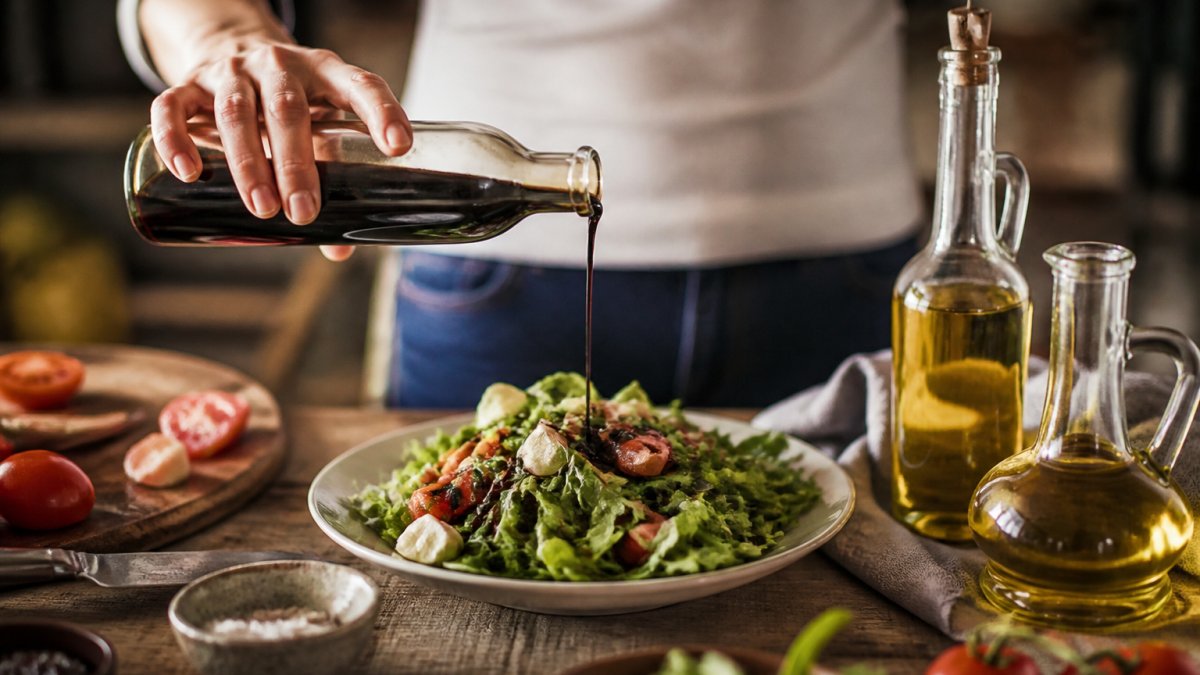
For lighter plates, our Coconut White Balsamic Vinegar is described as having a tropical coconut flavor and is listed for fresh fruit platters, delicate white fish, garden salads, marinades, and sauces.

Which Bottle Fits Your Kitchen: A Buying Decision Framework
Match the bottle to how you'll actually use it, not to how impressive the label looks. Answer three questions and the choice makes itself.
- Cooking nightly for family? A mid-priced IGP bottle is your workhorse.
- Finishing dishes at the table? Buy the aged bottle and use it sparingly.
- Gifting? Choose a certified, well-packaged bottle with a clear origin.
- Caring about authenticity? Check for DOP or IGP before anything else.
Best for: cooks who want one bottle that handles dressings, glazes, and drizzles. Skip if: you only need vinegar for marinades, where a cheaper bottle performs fine.
Taste the Difference Yourself at The Oil & Vinegar Bar
We bottle our olive oils and aged balsamics by hand on the Oregon Coast, sourcing from Spain, Tunisia, Greece, and Italy.
Frequently Asked Questions
What makes aged balsamic vinegar so expensive?
Two things: time and evaporation. Traditional balsamic vinegar of Modena ages in wooden barrels for a minimum of 12 years, and some bottles age 25 years or more. As it sits, water evaporates through the wood and the vinegar concentrates into a thick, syrupy liquid. A barrel that started with 100 liters may yield only a fraction of that after decades. Longer aging means less product, more labor, and a higher price per bottle.
Can you use expensive balsamic vinegar for cooking?
You can, but it is usually a waste. Heat flattens the complex aroma and syrupy texture that you paid for. Save the expensive bottle for finishing: drizzling over strawberries, shaving over Parmesan, or glazing a plate right before serving. For marinades, reductions, and salad dressings where the vinegar cooks or gets diluted, a mid-range bottle works well and costs far less.
Is expensive balsamic vinegar worth it compared to a grocery store bottle?
The Traditional Dark Balsamic of Modena is listed at $26 for 375ml. Its listing suggests using it alone or blended with infused olive oils for dipping sauce, or as a dressing for watermelon feta salad.
How can you tell if balsamic vinegar is high quality?
Check the label first. Look for DOP or IGP certification, the region of origin, and an ingredient list that leads with cooked grape must rather than wine vinegar and caramel coloring. Then look at the liquid: real aged balsamic is dark, viscous, and coats the side of a glass. A quick taste test confirms it. High-quality balsamic balances sweetness and tartness with a long finish, while cheap bottles taste sharp and thin.
Does expensive balsamic vinegar need to be refrigerated after opening?
No. Traditional and aged balsamic vinegars keep well in a cool, dark pantry for years after opening because their acidity and sugar content preserve them. Refrigeration can actually thicken the vinegar and dull the aroma. Store the bottle upright, away from direct sunlight and heat, and wipe the neck after pouring to prevent sticky buildup. A slight change in texture over time is normal and does not mean the vinegar has gone bad.
The gap between an $8 bottle and a properly aged one is real, but it's smaller than the price tag suggests once you calculate cost per serving. Come taste the difference for yourself. Get started with The Oil & Vinegar Bar and find the bottle that fits your kitchen, backed by our hand-bottled selection and a shelf of aged balsamics ready to sample.
