

Artisanal Balsamic Vinegar: Benefits, Uses & Selection
Table of Contents
- What Makes Artisanal Balsamic Vinegar Different
- Health Benefits of Balsamic Vinegar Explained
- Artisanal Balsamic Vinegar Uses in the Kitchen
- How to Choose Balsamic Vinegar with Confidence
- How to Store Balsamic Vinegar for Maximum Shelf Life
- Why Premium Balsamic Vinegar Is Worth the Investment
- Frequently Asked Questions
Last Updated: October 7, 2026
What Makes Artisanal Balsamic Vinegar Different
Artisanal balsamic vinegar stands apart from mass-produced versions through time-honored production methods and strict quality standards. Traditional producers age the grape must for years in wooden barrels, concentrating it into complex flavors commercial producers cannot replicate in weeks or months.
At The Oil & Vinegar Bar, we source our aged balsamic vinegars from Italy's finest regions, where centuries-old craftsmanship still governs production. This creates a syrupy, complex vinegar that transforms simple dishes into something memorable.
Commercial balsamic vinegar, by contrast, often relies on caramel coloring, added sugars, and shortcuts that sacrifice depth for speed. Artisanal versions coat your palate with richness and subtle fruit undertones, while commercial alternatives taste thin and one-dimensional. Genuine aged balsamic also has a deep mahogany hue that catches the light, not the artificial black of mass-produced imitations.
What you're buying isn't just vinegar; it's the accumulated craftsmanship of producers who refuse to compromise. When you use artisanal balsamic vinegar in your cooking, you elevate the entire dish with layers of flavor cheaper alternatives cannot deliver.
Health Benefits of Balsamic Vinegar Explained
Balsamic vinegar offers several potential health benefits beyond its culinary role. Its acetic acid, antioxidants, and polyphenols work together to support digestive health and overall wellness.
Many people find that incorporating balsamic vinegar into their diet supports digestion and nutrient absorption. Its acetic acid helps your body process foods more efficiently, particularly when consumed with meals, which is why vinegar-based dressings have appeared in traditional cuisines for centuries.
Artisanal balsamic vinegar also contains polyphenols, plant compounds that act as antioxidants, helping neutralize free radicals and reduce oxidative stress.
Antioxidants and Polyphenols
Polyphenols occur naturally in grapes and grape must, the primary ingredient in authentic balsamic vinegar. They concentrate significantly during aging, so the darker the vinegar, the higher its polyphenol content and antioxidant density.
These antioxidants help your body manage inflammation and protect cells from damage. When you drizzle traditional balsamic vinegar over fresh vegetables or use it in a vinaigrette, you add compounds that support your body's natural defenses alongside exceptional flavor.
This is another reason The Oil & Vinegar Bar emphasizes sourcing traditional balsamic from Modena.
Acetic Acid and Digestion
Acetic acid is the active compound in all vinegars and plays a meaningful role in digestion. Consumed with meals, it can slow gastric emptying, promoting better nutrient absorption and more stable blood sugar levels, which is why vinegar has been a culinary staple worldwide for thousands of years (pubmed.ncbi.nlm.nih.gov).
A common approach is to use balsamic vinegar as a salad dressing base or drizzle small amounts over finished dishes. This delivers acetic acid's digestive benefits with negligible calories and significant flavor, and aged balsamic's complexity makes it a more enjoyable way to support digestive health.

Consistency matters more than quantity: a tablespoon of balsamic vinegar consumed regularly with meals offers more benefit than occasional larger amounts. Incorporating artisanal balsamic vinegar into everyday cooking, rather than reserving it for special occasions, maximizes both flavor and health benefits.
Artisanal Balsamic Vinegar Uses in the Kitchen
Artisanal balsamic vinegar transforms ordinary ingredients into something extraordinary. Beyond the salad bowl, it works as a finishing ingredient, glaze, marinade component, and flavor enhancer that elevates both weeknight dinners and sophisticated entertaining.
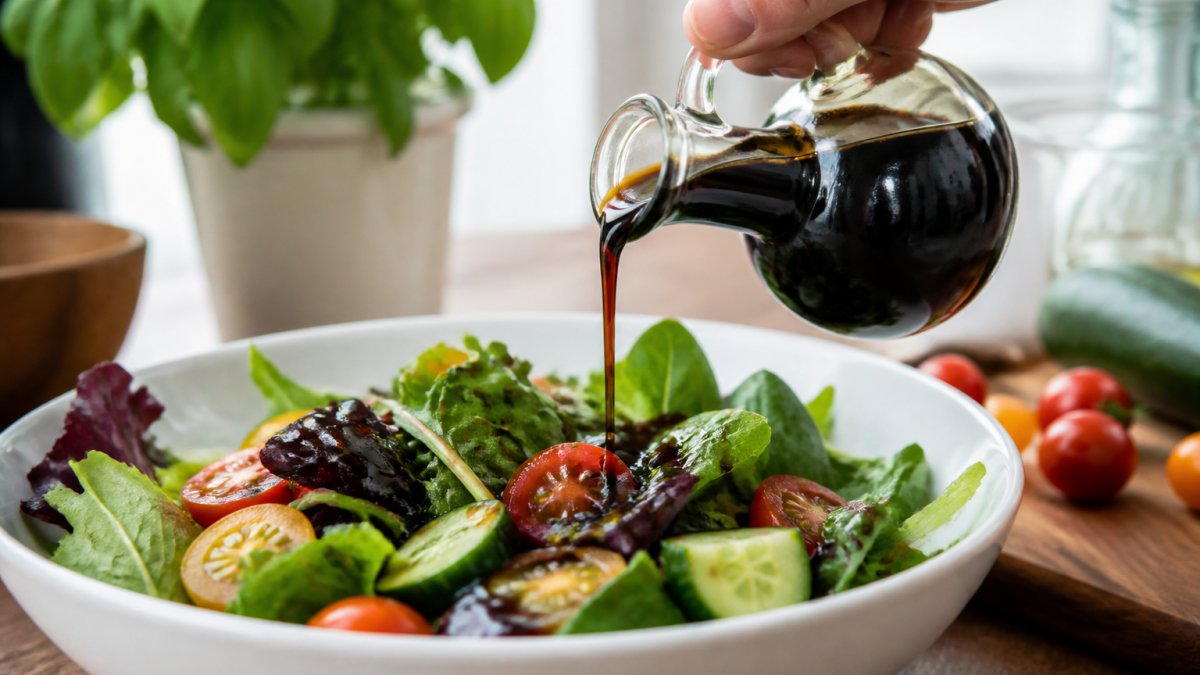
Use artisanal balsamic as a finishing ingredient, not a cooking ingredient. High heat breaks down the delicate compounds that make aged balsamic special, so add it at the end of cooking or use it raw in dressings and drizzles to preserve its complexity and depth.
Salads and Vinaigrettes
A simple vinaigrette needs only artisanal balsamic vinegar, quality olive oil, and perhaps a touch of Dijon mustard. Use roughly one part balsamic to three parts olive oil, adjusting to taste; this formula works on any salad, from simple greens to composed salads with grains, proteins, and roasted vegetables.
The vinegar's natural sweetness means you rarely need added sugar or honey. Commercial dressings rely on sweeteners to balance acidity, but artisanal balsamic vinegar achieves this balance through aging, ideal for health-conscious cooks who want full flavor without added sugars.
Use the same formula on grain bowls, roasted vegetable platters, or fresh fruit salads. Aged balsamic vinegar's rich, tangy flavor complements both savory and slightly sweet applications, making it one of the most useful ingredients in your pantry.
Vegetables and Beyond
Roasted vegetables benefit dramatically from a final drizzle of artisanal balsamic vinegar. Toss Brussels sprouts, beets, or root vegetables with olive oil, roast until caramelized, then finish with a small amount of balsamic just before serving. The vegetables' heat warms the vinegar, releasing aromatic compounds and creating a glaze-like coating.
Caprese salads, the classic combination of tomatoes, fresh mozzarella, and basil, reach their full potential with quality balsamic vinegar. A few drops transform a simple summer dish into something restaurant-worthy, the acidity cutting through the cheese's richness while complementing ripe tomatoes.
Balsamic vinegar also works beautifully with proteins. A reduction (simmered gently until thickened) creates an elegant glaze for grilled chicken, roasted pork, or seared fish. The concentrated flavor is intense, requiring only small amounts to transform everyday cooking into meals that make guests ask for your recipes.
Traditional Dark Balsamic of Modena →
How to Choose Balsamic Vinegar with Confidence
Selecting authentic artisanal balsamic vinegar requires understanding the labeling system and quality markers that distinguish genuine products from imposters, since the market is crowded with products bearing little resemblance to the traditional product from Italy's Modena region.
Understanding Modena PGI Standards
Balsamic Vinegar of Modena carries Protected Geographical Indication (PGI) status, establishing specific production requirements and quality standards. PGI protection means the vinegar must be produced in the Modena region using approved methods, though standards are less strict than the DOP (Protected Designation of Origin) classification reserved for the most traditional producers.
A PGI-certified balsamic must age at least 60 days, though most quality producers exceed this significantly. The label assures you the product meets established standards for grape variety, production methods, and composition, not merely a vinegar using "balsamic" in its name.
The distinction between PGI and DOP matters if you're seeking the absolute highest quality. For most home cooking purposes, PGI certification ensures quality.
Quality Markers and Authenticity
Reading the ingredient list reveals whether you're buying authentic balsamic vinegar or a commercial imitation. Genuine balsamic vinegar contains only grape must. If you see caramel coloring, added sugars, or thickening agents on the label, you're looking at a commercial product, not artisanal balsamic vinegar.
The price point offers another quality signal. Authentic aged balsamic vinegar costs more because of the time and care invested in production. Our Traditional Dark Balsamic of Modena at The Oil & Vinegar Bar, for instance, reflects the investment required to source and bottle genuine product.

Color and consistency provide visual clues about quality. Authentic balsamic vinegar has a deep mahogany or black color and a thick, syrupy consistency that clings to the sides of the bottle when you tilt it. Commercial balsamic vinegar appears thinner and more translucent, lacking the richness that comes from proper aging. When you pour it, real balsamic vinegar moves slowly; cheap imitations flow like regular vinegar.
How to Store Balsamic Vinegar for Maximum Shelf Life
Proper storage ensures your artisanal balsamic vinegar maintains its quality and flavor for years.

Store your balsamic vinegar in a cool, dark place away from direct sunlight and heat sources. A pantry shelf or kitchen cupboard works perfectly; the refrigerator is unnecessary and takes up valuable space. The ideal storage temperature is between 50-70 degrees Fahrenheit, room temperature in most homes. Avoid storing it above the stove or in direct sunlight, as heat and light degrade the delicate compounds that make artisanal balsamic vinegar special.
Keep the bottle tightly sealed when not in use. An open bottle exposed to air will continue to age and concentrate, which can eventually make it overly thick and intensely strong. Most quality balsamic vinegars come with a cap that seals well; ensure it's closed properly after each use. A properly sealed bottle of authentic balsamic vinegar maintains its quality for several years.
Why Premium Balsamic Vinegar Is Worth the Investment
The question many home cooks ask is straightforward: why spend three or four times as much on artisanal balsamic vinegar when grocery store alternatives cost a fraction of the price? The answer lies in what you're actually purchasing and how it transforms your cooking.
Premium artisanal balsamic vinegar delivers measurable differences in flavor and complexity that cheaper alternatives simply cannot match. A single bottle of quality aged balsamic vinegar lasts longer than multiple bottles of commercial vinegar because the flavor is so concentrated that you use less. A teaspoon of genuine artisanal balsamic vinegar adds more depth and sophistication than a tablespoon of mass-produced imitation.
When you cook with The Oil & Vinegar Bar's Traditional Dark Balsamic of Modena or our Apricot Dark Infused Aged Balsamic Vinegar, you're using an ingredient that elevates every dish it touches. The difference is noticeable immediately: your salads taste more refined, your roasted vegetables develop an elegant glaze, your simple proteins transform into restaurant-quality presentations. This is the kind of ingredient that makes people notice your cooking and ask for your recipes.
Beyond the culinary impact, premium balsamic vinegar represents a commitment to quality ingredients and traditional craftsmanship. The producers who create these vinegars have dedicated their lives to perfecting their craft, using methods refined over centuries. When you choose artisanal balsamic vinegar, you're supporting that tradition and ensuring that these time-honored techniques continue to survive in an era of mass production.
The investment also makes practical sense. A bottle of quality balsamic vinegar costs more upfront, but because you use less and it lasts longer, the actual cost per use is often comparable to cheaper alternatives. More importantly, the meals you create with premium ingredients are the ones you remember and the ones you share with people you care about. That's where the real value lies.
Elevating your everyday cooking doesn't require complicated techniques or exotic ingredients, it requires the right ingredients. Artisanal balsamic vinegar from The Oil & Vinegar Bar transforms simple salads into memorable meals and everyday proteins into dishes worth celebrating. Explore our selection of Traditional Dark Balsamic of Modena, White Balsamic Vinegar, and Apricot Dark Infused Aged Balsamic Vinegar, each sourced from Italy's finest producers and hand-bottled on the Oregon Coast. Discover how genuine artisanal balsamic vinegar can elevate your home cooking with depth, complexity, and the kind of quality that makes every meal feel special.
Frequently Asked Questions
What makes artisanal balsamic vinegar different from regular balsamic vinegar?
Artisanal balsamic vinegar is aged longer in wooden barrels, developing deeper, more complex flavors. Traditional varieties follow strict Balsamic Vinegar of Modena PGI standards, using only grape must and time. Commercial versions are younger, often produced with additives and caramel coloring for faster results. The aging process in artisanal vinegar creates natural thickness, balanced acidity, and nuanced sweetness that everyday balsamic cannot match.
How can you tell if balsamic vinegar is authentic?
Look for the Protected Geographical Indication (PGI) seal on bottles from Modena, Italy, this certifies traditional production methods. Check the ingredient list: authentic balsamic should contain only grape must. Authentic balsamic has a thick, syrupy consistency and rich, balanced flavor. If the price is suspiciously low or ingredients list added sugars or thickeners, it's likely a commercial blend, not true artisanal vinegar.
Is it okay to eat balsamic vinegar every day?
Small amounts of balsamic vinegar are safe for daily use in cooking and dressings. A typical serving is 1-2 tablespoons mixed into vinaigrettes or drizzled over dishes. Some people consume it for potential health benefits like antioxidants and digestion support, but moderation is key due to natural sugar content. If you have kidney concerns, blood sugar sensitivities, or take medications affected by vinegar, consult your healthcare provider before making it a daily habit.
Should you refrigerate balsamic vinegar after it's opened?
No refrigeration is necessary. Store opened balsamic vinegar in a cool, dark cabinet away from direct sunlight and heat. The acidity preserves it naturally, and cold temperatures can cause crystallization or cloudiness. Keep the bottle tightly sealed to prevent oxidation. Properly stored, artisanal balsamic vinegar remains shelf-stable for years after opening, maintaining its flavor and quality.