

Best Olive Oil for Dipping Bread: A 2026 Review
Table of Contents
- Why the Best Olive Oil for Dipping Bread Changes Everything
- Our Top Picks: Best Olive Oil for Dipping Bread
- How to Season Olive Oil for Dipping
- The Best Bread for Olive Oil Dipping
- Olive Oil and Balsamic Vinegar Ratio: Getting the Blend Right
- How to Store Dipping Oil and Keep It Fresh
- Frequently Asked Questions
Last Updated: October 4, 2026
Why the Best Olive Oil for Dipping Bread Changes Everything
The best olive oil for dipping bread is a fresh, cold-extracted extra virgin oil with a flavor profile that matches your bread and your guests.
A $4 supermarket bottle and a fresh, single-harvest oil are not the same product. The difference shows up the moment bread touches oil.
Below, we break down what separates a dipping oil from a cooking oil, our top picks, and how to season, pair, and store everything so the last slice tastes as good as the first.
What Separates a Dipping Oil from a Cooking Oil
A dipping oil is an extra virgin olive oil served raw, so its flavor, aroma, and texture reach your palate untouched. A cooking oil gets heated, which softens bitterness and burns off delicate aromatics. That is why an oil that tastes harsh straight from the spoon can still be fine for roasting.

Dipping is raw consumption. Nothing hides behind heat. Look for these markers:
- Cold-pressed or cold-extracted on the label, meaning the oil was never heated during extraction
- A harvest date, not just a "best by" date
- Dark glass packaging that shields the oil from light
- A peppery finish or fruity notes you can actually taste
Acidity level matters here too. Viscosity plays a role as well: a thicker, cloudier oil clings to bread differently than a thin, filtered one.
How to Taste Olive Oil Like a Pro
Tasting olive oil follows the same logic as tasting wine. Professionals use a method called sensory evaluation, and you can copy it at home in under a minute.
- Pour a small amount into a glass or small cup.
- Cup it in one hand and warm it briefly to release the aromatics.
- Cover the top and breathe in through your nose.
- Take a small sip and draw air across it, the way you would slurp hot soup.
- Note where you feel the oil: the bitterness lands at the back of the tongue, and the peppery finish shows up in your throat.
That peppery catch is a sign of polyphenols, the natural compounds behind the oil's character (pubmed.ncbi.nlm.nih.gov). A mild oil may show almost none. A high-phenolic oil will make you cough, and that is a feature, not a flaw.
Our Top Picks: Best Olive Oil for Dipping Bread
Every oil below is $26.00 and hand-bottled in small batches. They differ in intensity, texture, and what they pair with, not in quality. Match the oil to the mood of the meal and you cannot go wrong.
| Oil | Flavor Profile | Texture | Best For |
|---|---|---|---|
| Sevillano Extra Virgin | Grassy, herby, artichoke hints | Smooth, full | All-purpose dipping |
| Ambrosia Extra Virgin | Green, peppery, garden-fresh | Thick, cloudy | Purists and bold palates |
| California Mission Winter Harvest | Mild, sweet, buttery | Velvety | Guests who avoid bitterness |
| Infused Oils (Basil, Garlic, Rosemary, Tuscan Herb, Artichoke Garlic) | Herb-forward | Smooth base | Themed appetizers |
Sevillano Extra Virgin Olive Oil: The Award-Winning Crowd-Pleaser
If you want one bottle that handles every table, start here. Our most popular and award-winning oil, Sevillano is smooth and full flavored, with hints of artichokes and fresh herbs. It captures the rich zest of newly ripened green olives, the grassiness many tasters look for first. It is wonderfully versatile, and it is the bottle we reach for when we do not know the crowd yet. Sevillano Extra Virgin Olive Oil comes in a 275ml bottle.

Ambrosia Extra Virgin Olive Oil: Raw, Unfiltered, and Bold
Ambrosia is the boldest oil on this list, and it is not for timid palates. It is absolutely raw and unfiltered, cold-pressed using the stone-grinding methods of old mills, a process used in Greece for centuries.
Because it is unheated and unfiltered, it keeps all its natural, raw goodness. Serve it simply with fresh, crusty bread and a pinch of sea salt, and let the oil be the star. Ambrosia Extra Virgin Olive Oil comes in a 375ml bottle.
California Mission Winter Harvest: Mild and Buttery
Not everyone loves a peppery kick, and that is exactly who this bottle serves. The California Mission olive traces its roots to orchards planted by the Jesuit and Franciscan missions across California centuries ago. The result is velvety smooth and mild, with a gentle touch of sweet flavor. It is decadently buttery. Try the California Mission Winter Harvest Extra Virgin Olive Oil when you want everyone at the table to say yes.

Infused Oils: Basil, Garlic, Rosemary, Tuscan Herb, and Artichoke Garlic
Infused oils solve a hosting problem: they deliver a finished flavor without any last-minute chopping. Our Basil Infused Olive Oil opens with a rush of concentrated, sweet garden basil and finishes crisp and clean. The Garlic Infused Olive Oil is clean, crisp, and fragrant, and it blends with any balsamic to make a savory dipping sauce in seconds.
For something with more depth, the Rosemary Olive Oil brings bright, herbal rosemary over a smooth, rounded base, and its depth opens up beautifully when warmed. The Tuscan Herb Olive Oil is herby and bold, while the Artichoke Garlic Olive Oil offers a delicate garlic-and-artichoke combination that is a natural for bread dipping.
How to Season Olive Oil for Dipping
Seasoning is where most hosts overdo it. A good dipping oil needs three or four ingredients at most, and the oil should still taste like oil when you are done.
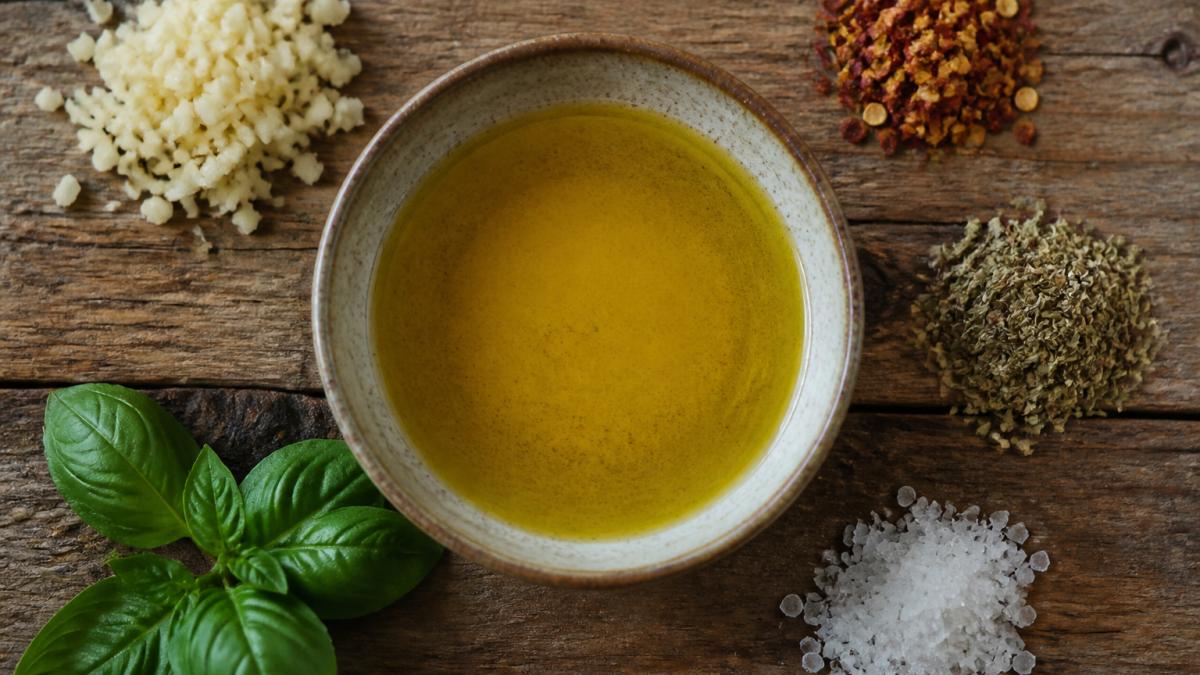
Classic Herb and Spice Combinations
The classic Italian restaurant blend is hard to beat, and it takes two minutes to build.
- The Classic: minced garlic, dried oregano, red pepper flakes, and sea salt
- The Garden: fresh basil, a crack of black pepper, and flaky sea salt
- The Warm Note: a pinch of dried thyme and a little grated lemon zest
Let the seasoned oil sit for 15 to 20 minutes before serving. The dried herbs need time to soften and release their oils. Fresh herbs go in right before the bread hits the table so they stay green and bright.
When to Skip the Seasoning
Skip the seasoning whenever the oil itself is the point. A raw, unfiltered oil with a bold peppery finish already carries more flavor than any spice blend you can add. Adding garlic to Ambrosia is like adding ketchup to a steak.
The same rule applies to every infused oil on our list. They are already seasoned. Taste the oil first, then decide whether it needs anything at all. Most of the time, it does not.
Sevillano Extra Virgin Olive Oil →
The Best Bread for Olive Oil Dipping
The best bread for olive oil dipping is a crusty loaf with a firm, open crumb: a rustic sourdough, a country boule, or a baguette with a real crust. The crust gives you structure to grip, and the soft interior soaks up oil without collapsing.
Crusty Bread and Texture Compatibility
Texture compatibility is the variable most guides ignore, and it changes everything about the experience. A dense, heavy crumb absorbs oil quickly and turns to paste. A light, airy crumb holds a thin film of oil on its surface and lets you taste both.
Match the bread to the oil's viscosity:
- Thin, filtered oils suit tight-crumbed breads like ciabatta, where absorption is fast
- Thick, cloudy oils suit open-crumbed sourdough, where the oil pools in the holes
- Warmed bread releases aroma and thins the oil slightly as it hits the surface
Slice thick, about a half inch, and serve the bread warm but not hot. Hot bread drinks oil like a sponge.
Bread Types That Fall Apart
Soft sandwich loaves and pre-sliced supermarket bread are the wrong tools for this job. They shred on contact, leave crumbs in the bowl, and turn gummy within seconds. Flatbreads and pita work better than sandwich bread, but they tear under a heavy oil.
If you only have soft bread on hand, toast it first. A few minutes in a dry pan firms the surface enough to hold up to a dip.
Olive Oil and Balsamic Vinegar Ratio: Getting the Blend Right
The classic olive oil and balsamic vinegar ratio is 3 parts oil to 1 part balsamic. That blend gives you the roundness of the oil with just enough acidity to cut through the fat.
Getting the blend right comes down to emulsification. Oil and vinegar do not bond on their own. Whisk them together, or shake them in a jar, and they hold long enough to serve.
Traditional Modena and Fig Balsamic Pairings
Our Traditional Dark Balsamic of Modena is one of our best-selling products, and it is the classic partner for any oil on this list. Blend it with an infused oil for a dipping sauce that needs nothing else.
The Fig Balsamic takes a different path. Its nutty, semi-sweet flavor deepens the blend and works especially well against a mild, buttery oil. Try fig balsamic with the California Mission Winter Harvest for a sweet-savory dip that surprises people.
How to Store Dipping Oil and Keep It Fresh
Store dipping oil in a dark glass bottle, tightly sealed, in a cool, dark cabinet away from the stove. Heat, light, and air are the three enemies of fresh olive oil, and all three speed up oxidation.
A few habits keep your oil at its best:
- Buy in sizes you will finish within a few months
- Keep the bottle capped between pours
- Never store oil above the stove or on a sunny windowsill
- Check the harvest date, not just the expiration date, when you buy
- Refrigerate only if your kitchen runs hot; cold oil may cloud, which is harmless
Seasoned dipping oil with fresh garlic or herbs should go in the refrigerator and be used within a few days. Plain oil keeps far longer.
If you want to know how a producer handles freshness, look for a harvest date on the label and a commitment to small-batch bottling.
Choosing an oil for dipping bread asks more of you than choosing one for the frying pan. The oil is raw, front and center, and every flaw shows.
Frequently Asked Questions
What characteristics should I look for in an olive oil for dipping?
Look for cold-pressed or cold-extracted extra virgin olive oil with a harvest date on the label. Freshness matters because oxidation dulls flavor. Check for a peppery finish or fruity notes that indicate polyphenols. A dark glass bottle protects against light damage.
Is extra virgin olive oil the best choice for dipping bread?
Yes. Extra virgin olive oil is unrefined, so it retains natural polyphenols, antioxidants, and the full flavor profile that makes dipping enjoyable. Regular olive oil is refined and loses much of its character. For raw consumption like dipping, EVOO is the standard choice.
What is the best bread for olive oil dipping?
Crusty bread with a firm crumb works best. Sourdough, ciabatta, focaccia, and rustic baguettes hold up without falling apart. Avoid soft sandwich bread or anything with a tender crumb that disintegrates. The bread's texture should complement the oil's viscosity, not compete with it.
What is the ideal olive oil and balsamic vinegar ratio for dipping?
Start with a 3:1 ratio of olive oil to balsamic vinegar. This gives you the oil's fruitiness with a balsamic tang. For a sharper dip, try 2:1. For a milder, more oil-forward flavor, use 4:1. Whisk briefly to emulsify, or let guests swirl their own.
How do I store olive oil to maintain its dipping quality?
Keep it in a dark glass bottle away from heat and light. A cool pantry works better than a countertop near the stove. If you buy in bulk, transfer a small amount to a dipping vessel and keep the rest sealed.