

Is Expensive Olive Oil Worth It? A Real Comparison
Table of Contents
- The Price Gap: What You're Actually Paying For
- Cheap vs Expensive Olive Oil: Where the Real Differences Show
- How to Choose Olive Oil That Matches Your Budget and Needs
- Best Extra Virgin Olive Oil: When Premium Quality Pays Off
- The Real Cost: Price Per Use and Value for Money
- Verifying Authenticity and Freshness Before You Buy
- Frequently Asked Questions
Last Updated: October 5, 2026
The Price Gap: What You're Actually Paying For
Standing in the grocery aisle comparing an $8 bottle of olive oil to one priced at $26, the question becomes unavoidable: is expensive olive oil worth it? What you're paying for shifts dramatically between budget and premium oils, and understanding those differences changes how you shop.

The gap between cheap and expensive olive oil reflects measurable differences in how the oil is made, when it was harvested, and what happens after pressing. A budget oil might be refined, blended from multiple sources, or stored for months. A premium oil from The Oil & Vinegar Bar is sourced from specific regions and bottled to preserve freshness. These variations affect flavor, nutrition, and cooking performance.
The real question isn't whether expensive olive oil is worth the premium across all uses, but whether you're using it in ways that justify the cost.
Cheap vs Expensive Olive Oil: Where the Real Differences Show
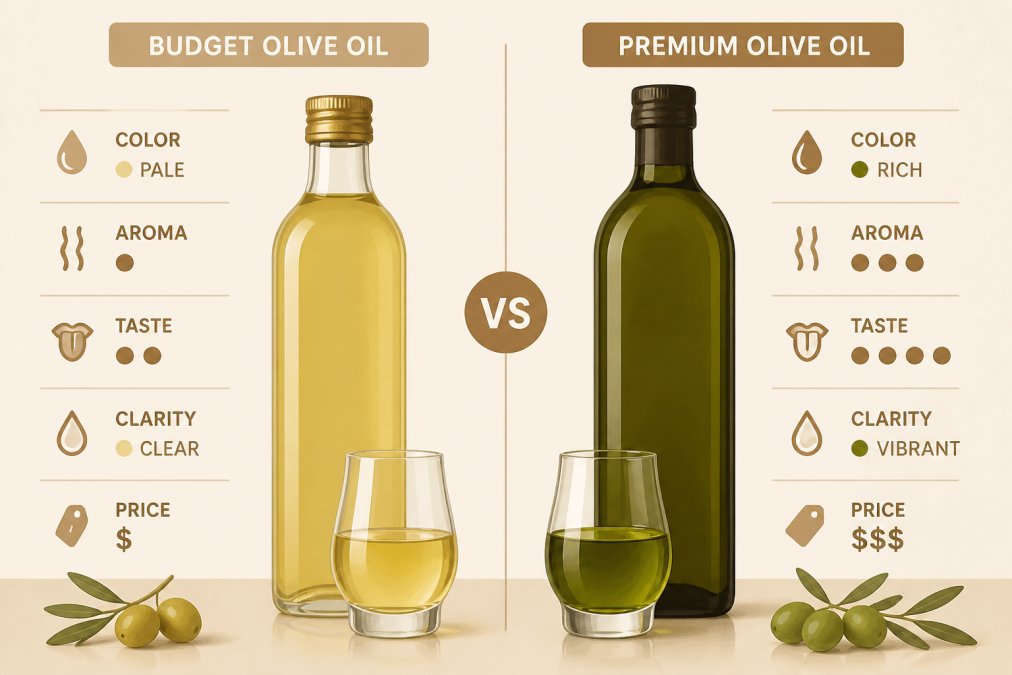
Budget and premium olive oils occupy almost entirely different product categories, despite sitting next to each other on the shelf. Understanding what separates them helps you match decisions to your cooking needs and budget.
Freshness and Harvest Date
The most significant difference is freshness. Budget oils are often a year or more old by the time they reach your kitchen. Premium oils, especially those from The Oil & Vinegar Bar, are labeled with a harvest date.
Olive oil degrades over time: light, heat, and oxygen break down the compounds that give fresh oil its flavor and nutrition. An oil that sat in a warehouse for six months tastes flatter than one pressed recently. For finishing applications, freshness is critical; for high-heat cooking, it matters less.
Check the label for a harvest date. If it's missing, the oil is likely older stock. Reputable premium oils often include it because freshness justifies the price.
Flavor Intensity and Complexity
Expensive olive oil delivers flavor complexity budget oils cannot match. A premium extra virgin might taste of fresh-cut grass, artichokes, almonds, or peppery heat. A budget oil tastes neutral, mild, forgettable.
This difference comes from harvest timing and processing. Early-harvest green olives yield stronger, peppery oil; fully ripe olives yield buttery, mild oil. Budget producers blend multiple sources and harvest times for a consistent, inoffensive product, while premium producers are intentional about which olives they use and when they harvest.
The Sevillano Extra Virgin Olive Oil from The Oil & Vinegar Bar, for example, captures hints of artichokes and fresh herbs with a grassy flavor profile, characteristics that come from careful harvest timing and immediate cold-pressing. The Ambrosia Extra Virgin Olive Oil offers a green and peppery finish with a velvety texture, qualities that reflect its raw, unfiltered processing using centuries-old Greek stone-grinding methods.

If you're drizzling oil over finished dishes or using it in vinaigrettes where flavor matters, the taste difference justifies premium pricing. If you're sautéing vegetables, where heat mutes subtle flavors, a budget oil performs adequately.
Processing Methods and Purity
How olive oil is made determines what ends up in the bottle. Budget oils are often refined, chemically treated to remove color, flavor, and aroma.
Premium oils are cold-pressed, meaning olives are crushed at low temperatures without chemicals. This preserves natural compounds like polyphenols and antioxidants, plus flavor and aroma. The trade-off: freshness and proper storage matter more.
Some premium oils, like Ambrosia, are unfiltered and raw. The cloudiness isn't a flaw, it's evidence the oil retains its natural compounds and hasn't been processed to remove sediment, making it a nutrient powerhouse compared to refined alternatives.
The California Mission Winter Harvest Extra Virgin Olive Oil represents a different approach: a velvety smooth, mild-tasting oil that's still cold-pressed but offers a buttery quality that works well in everyday cooking and finishing applications.
How to Choose Olive Oil That Matches Your Budget and Needs
The right olive oil depends on how you plan to use it and how much you're willing to spend. No single "best" oil exists: the best for salad dressing is wrong for high-heat cooking, and the best for finishing pasta is overkill for sautéing vegetables.
Reading Labels for Grade and Origin
Start with the label. Extra virgin olive oil has the lowest acidity and highest quality standards, and comes from the first cold-pressing.

Look for origin information. Single-origin oils from specific regions (Spain, Greece, Italy, Tunisia) have distinct profiles: Greek oils tend peppery and grassy, Spanish oils fruity and buttery, Italian oils vary by region. Blended oils are budget-friendly but less distinctive.
A harvest date or "best by" date tells you freshness. If the label omits it, ask the retailer or skip it.
Certification matters less than freshness and origin for most home cooks. Organic certification adds cost.
Matching Oil Type to Cooking Method
Save premium oil for applications where it matters most: finishing, drizzling over soups, salads, bread, or completed dishes where its flavor shines. A bottle lasts longer this way because you use less.
For cooking, especially high-heat sautéing or frying, a less expensive oil is perfectly adequate. Heat destroys the subtle flavors that make premium oils special, and a refined olive oil with a higher smoke point works better anyway.
For medium-heat cooking like gentle sautéing or low-temperature baking, a mid-range extra virgin oil strikes a balance: better flavor than budget without wasting premium oil on heat that diminishes its qualities.
Sevillano Extra Virgin Olive Oil →
Best Extra Virgin Olive Oil: When Premium Quality Pays Off
Premium extra virgin olive oils justify their cost in specific contexts. Knowing when to splurge and when to save separates smart shopping from wasting money on products that don't match your needs.
Finishing Oils vs Cooking Oils
A finishing oil is the star ingredient, drizzled over a completed dish in small amounts for flavor and visual appeal. This is where expensive olive oil delivers the best return: a tablespoon can transform a simple bowl of pasta or grilled fish.
The Sevillano Extra Virgin Olive Oil from The Oil & Vinegar Bar works beautifully as a finishing oil. Its smooth, full flavor with hints of artichokes and fresh herbs makes it perfect for bread dipping, salad dressings, and drizzling over main courses.
The Ambrosia Extra Virgin Olive Oil, also $26, serves a different finishing role. Its raw, unfiltered nature and green, peppery finish make it ideal for finishing pasta, soups, and stews right before serving. The velvety texture and garden-fresh flavor are qualities that only exist because the oil is unfiltered and unheated, characteristics that disappear entirely if you use the oil for cooking.
A cooking oil, by contrast, is functional: you use larger quantities, and heat destroys the subtle qualities that justify premium pricing. For cooking, a less expensive refined olive oil or a different oil makes more financial sense.
Health and Nutrient Retention
Premium cold-pressed and unfiltered olive oils retain more natural compounds than refined alternatives, including antioxidant polyphenols and micronutrients that degrade during refinement or high-temperature processing.
If you want maximum nutritional value, premium unfiltered oils deliver more. The Ambrosia Extra Virgin Olive Oil, for example, is unheated and unfiltered, retaining all its natural compounds and nutrients, part of what makes it a "nutrient powerhouse" compared to standard olive oil.
However, the health difference between budget and premium extra virgin oil is smaller than the difference between extra virgin and refined oil. All extra virgin oils retain more nutrients than refined.
If health is your primary concern, buying extra virgin (any extra virgin) matters more than buying premium. If you already buy extra virgin and want to maximize nutrition, premium unfiltered oils make sense.
The Real Cost: Price Per Use and Value for Money
Expensive olive oil doesn't have to mean expensive meals. Think price per use, not price per bottle.
A $26 bottle of premium finishing oil contains roughly 9 ounces. If you use a teaspoon (about 0.17 ounces) as a finishing drizzle over a dish, that bottle provides approximately 50 servings. That's about 52 cents per use. For comparison, a $8 budget oil costs about 17 cents per use, but if the budget oil is a year old and tastes flat, you're not getting the same product.
The real question is whether the flavor and freshness difference is worth the additional 35 cents per serving. For weeknight dinners where oil plays a supporting role, many home cooks reasonably decide it's not. For special meals, guests, or dishes where oil is featured, the premium often feels justified.
Premium oil also encourages intentionality. When you've invested in a quality bottle, you're more likely to use it thoughtfully, finishing rather than cooking with it, pairing it with complementary ingredients, savoring the flavor. That mindfulness often leads to better meals.
Verifying Authenticity and Freshness Before You Buy
Olive oil fraud is real (Adulteration of Olive Oil with Hazelnut Oil). Knowing how to verify what you're buying protects your wallet.
Check the harvest date first. Legitimate premium producers always include this. If it's missing, move on. A harvest date tells you the oil is recent and the producer is confident in freshness.
Look at the bottle. Premium oils are typically stored in dark glass to protect from light damage.
Taste before committing to a large purchase if possible.
Buy from sources you trust. Specialty retailers, producers, and established online retailers are more reliable than supermarket shelves, where oils sit longer and face light and temperature fluctuations.
Check the price relative to the product. Extremely cheap "premium" oil is a red flag. If the price seems too good to be true, it probably is.
Is expensive olive oil worth it? For finishing dishes, adding flavor to salads and vinaigrettes, or gifts for food-loving friends, premium oils from The Oil & Vinegar Bar deliver noticeable quality that justifies the cost.
| Use Case | Best Oil Type | Cost Consideration |
|---|---|---|
| Finishing pasta, soups, bread dipping | Premium extra virgin (unfiltered) | Higher cost justified; use sparingly |
| Salad dressings, vinaigrettes | Premium extra virgin | Higher cost justified; flavor is central |
| Sautéing vegetables, medium-heat cooking | Mid-range extra virgin or refined | Moderate cost; heat diminishes premium qualities |
| High-heat cooking, frying | Refined olive oil or alternative oil | Lower cost appropriate; flavor destroyed by heat |
| Gifting to food enthusiasts | Premium single-origin extra virgin | Higher cost justified; presents quality and care |
Frequently Asked Questions
Is there a real difference between cheap and expensive olive oil?
Yes. Premium olive oils differ in freshness, flavor intensity, and processing method. Expensive oils are typically fresher (harvested within months rather than a year), made from carefully selected olives, and often cold-pressed to retain nutrients and flavor. Budget oils are often refined, blended from older harvests, or cut with other oils. You'll taste the difference most in finishing applications like salads or bread dipping, where the oil is the star ingredient.
How much should good-quality olive oil cost?
Quality extra virgin olive oil typically ranges from $15 to $40 per 375ml bottle, depending on origin, harvest date, and processing method. Premium oils like our Ambrosia and Sevillano at $26 per 275ml bottle offer excellent value for unfiltered, fresh oils with verifiable sourcing. Budget oils under $8 per bottle are usually refined or blended. Invest more if you use oil as a finishing touch; save on bulk cooking oils.
When is it actually worth buying expensive olive oil?
Premium olive oil pays off when the oil's flavor matters: drizzling over soups, dressing salads, dipping bread, or finishing pasta. It's less critical for high-heat cooking, where flavor compounds break down anyway. If you cook weeknight family dinners and rarely use oil as a featured ingredient, a mid-range option works fine. But if you entertain, value bold flavors, or want to impress with gift-quality ingredients, premium oils deliver noticeable results that justify the cost.
How can I verify that expensive olive oil is actually fresh and authentic?
Check the harvest date on the label, not just the bottling date. Fresh oil should be from the previous year or current year. Look for 'extra virgin' certification and single-origin statements (like 'Greek' or 'Spanish'). Unfiltered oils are often fresher and less processed. Reputable producers list their cold-pressing method. Avoid oils with vague origins or unclear processing details. Our Ambrosia, for example, clearly states its Greek stone-grinding tradition and lack of pesticides, making authenticity verifiable.