

Top 10 Olive Oil Brands in the World Compared
Quick Summary
The top olive oil brands in the world are compared here on origin transparency, harvest-date labeling, taste range, cooking versatility, and value per fluid ounce. Sevillano, Ambrosia, and California Mission Winter Harvest are highlighted for everyday cooking and finishing, while infused olive oils suit specific dishes.
- Check the printed harvest month and year, not just the best-by date, to judge freshness.
- Compare price per fluid ounce: a 275 ml Sevillano at $26.00 is about $2.80 per fluid ounce.
- Choose a specific named origin over a generic 'product of the EU' statement.
- Use mild extra-virgin oils for cooking and brighter, peppery oils for finishing raw dishes.
- Buy infused oil sizes you can finish within a few months, since their aroma fades once opened.
Table of Contents
- How We Ranked the Top 10 Olive Oil Brands in the World
- Quick Comparison: Top 10 Olive Oil Brands at a Glance
- Best Extra-Virgin Olive Oil Brands by Origin and Taste
- Top 10 Olive Oil Brands in the World for Cooking
- Best Olive Oil to Drink Daily and How Freshness Affects It
- How to Choose Extra-Virgin Olive Oil Before You Buy
- Choosing Your Next Bottle From Our Olive Oil Collection
- Frequently Asked Questions
How We Ranked the Top 10 Olive Oil Brands in the World
Last Updated: November 4, 2026
Choosing among olive oil brands in the world is harder than it looks, and most rankings skip the part that matters most: how the ranking was built. At The Oil & Vinegar Bar, we curate a focused collection of olive oils sourced from Spain, Tunisia, Greece, and Italy.
The olive oil industry has no single definition of a "top" brand. Some oils win awards at competitions, others earn praise from chefs, and others simply sell well. We use a simple standard: a brand has to be consistently well made, clearly labeled, and easy to find, with a flavor profile that holds up in everyday cooking.
- Origin and producer transparency: Does the label name the country, region, or estate?
- Harvest date and freshness: Is a harvest or bottling date printed on the bottle?
- Taste profile: Fruitiness, bitterness, and peppery finish across the range
- Cooking versatility: How well the oil performs for finishing, dipping, and sautéing
- Value per volume: Price measured per ounce, not per bottle
Quick Comparison: Top 10 Olive Oil Brands at a Glance
Use this table to scan the main differences before reading the detailed sections. Learn how to fry with extra virgin olive oil if you plan to cook with it at higher heat. Because bottle sizes vary, the value column converts every listing to a price per fluid ounce so a 275 ml bottle and a 500 ml tin can be compared on equal terms. Prices reflect current listings and will move with harvest and freight costs.
| Brand / Oil | Origin | Size | Price | Price per fl oz | Best For | Standout Trait |
|---|---|---|---|---|---|---|
| Sevillano Extra Virgin Olive Oil | Spain (Andalusia) | 275 ml | $26.00 | $2.80 | Bread dipping, salads | Artichoke and fresh herb notes |
| Ambrosia Extra Virgin Olive Oil | Greece | 375 ml | $26.00 | $2.05 | Finishing raw dishes | Unfiltered, stone-ground |
| California Mission Winter Harvest | California | 375 ml | $26.00 | $2.05 | Gentle cooking | Mild, buttery flavor |
| Basil Infused Olive Oil | Italy (base oil) | 375 ml | $26.00 | $2.05 | Caprese, pesto base | Concentrated summer basil |
| Blood Orange Extra Virgin Olive Oil | Italy (base oil) | 375 ml | $26.00 | $2.05 | Desserts, glazes | Natural orange flavor |
| Meyer Lemon Extra Virgin Olive Oil | California (base oil) | 375 ml | $26.00 | $2.05 | Grilling, salads | Bright citrus finish |
| Rosemary Olive Oil | Spain (base oil) | 375 ml | $26.00 | $2.05 | Roasting, grilling | Earthy herbal aroma |
| Garlic Infused Olive Oil | Spain (base oil) | 375 ml | $26.00 | $2.05 | Dressings, sauces | Clean, savory garlic |
| Tuscan Herb Olive Oil | Italy (base oil) | 375 ml | $26.00 | $2.05 | Roasted vegetables | Bold, layered herbs |
| Persian Lime Extra Virgin Olive Oil | Spain (base oil) | 375 ml | $26.00 | $2.05 | Summer dressings | Light, aromatic lime |
Two things stand out once the math is done. First, the 275 ml Sevillano is the most expensive oil per ounce in the lineup at $2.80 per fluid ounce, while every 375 ml bottle lands at $2.05 per fluid ounce. Second, the infused oils share a base oil and differ mainly in the flavoring, so if you want a single bottle that covers both finishing and cooking, a plain extra-virgin oil gives you more flexibility per dollar than a flavored one.
A note on what this table does and does not measure. It compares brands on origin transparency, harvest-date labeling, taste range, cooking versatility, and value per volume, which are the criteria described in the ranking section above. It does not rank brands by competition medals, because a medal belongs to a specific lot and harvest year, not to a brand name forever.
Watch out: price per fluid ounce is only a fair comparison when the harvest dates are similar. A cheaper bottle from an older harvest is not a better value than a fresher bottle at a higher per-ounce price, because freshness is the quality you are actually buying.
Best Extra-Virgin Olive Oil Brands by Origin and Taste
Origin shapes flavor more than most shoppers realize. Oils from different regions and cultivars can taste grassy, buttery, peppery, or fruity, and that range is the best reason to keep a few bottles on hand.
Sevillano Extra Virgin Olive Oil is a popular bottle. If you prefer a bright, green profile, this is a dependable starting point. Shop Sevillano Extra Virgin Olive Oil

Persian Lime Extra Virgin Olive Oil brings a clean, citrus-forward character. Pair it with a fruity balsamic for a tangy vinaigrette. Explore the Persian Lime olive oil

Ambrosia Extra Virgin Olive Oil is unfiltered and stone-ground, with a velvety texture and a green, peppery finish. Because it is unheated, its aroma is especially fresh. It shines as a finishing oil over pasta, soups, or grilled vegetables.
California Mission Winter Harvest Extra Virgin Olive Oil takes a gentler approach, with a velvety, mild taste and a subtle sweetness. It suits cooks who want an oil that complements food rather than dominating it.
Taste is subjective, so buy one bottle of each style before committing to a larger size. Your preference for peppery or mild oils will become clear quickly.
Top 10 Olive Oil Brands in the World for Cooking
Cooking performance depends on how an oil behaves under heat as well as how it tastes raw.
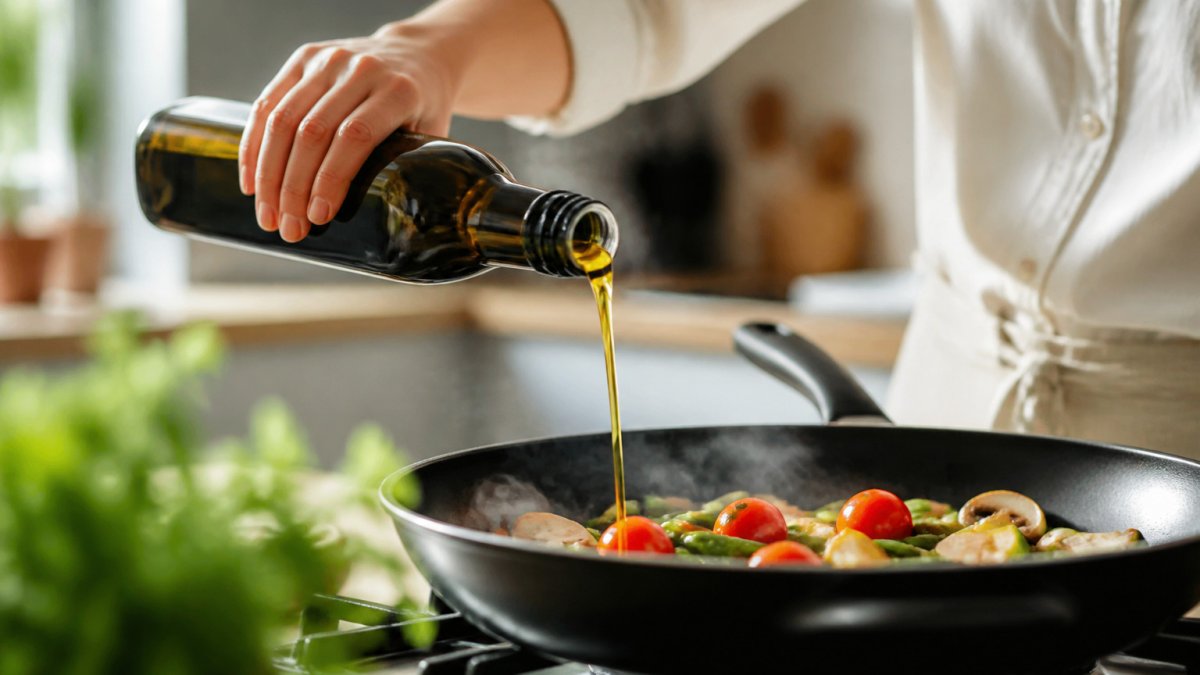
Basil Infused Olive Oil is well suited to Caprese salads and pesto bases. Its concentrated summer basil flavor makes simple meals taste fresh.
Garlic Infused Olive Oil is clean and fragrant, and it adds savory depth to sauces and marinades. Blend it with a balsamic for a dipping sauce that works well with crusty bread.
Rosemary Olive Oil is earthy and aromatic. It is well suited to grilling salmon or poultry and to roasting potatoes or focaccia.
Tuscan Herb Olive Oil offers bold, layered herb flavor, which works well drizzled over roasted vegetables or grilled chicken.
Sevillano Extra Virgin Olive Oil →
Meyer Lemon and Blood Orange Extra Virgin Olive Oils add natural citrus to grilled seafood, chicken, and vegetables. Use them to finish dishes rather than to cook at high heat, so the bright notes stay intact.
Watch out: infused oils lose aroma quickly once opened, so buy a size you will finish within a few months.
Best Olive Oil to Drink Daily and How Freshness Affects It
Many people take a spoonful of extra-virgin olive oil daily or use it generously across meals. Freshness is the main factor here.
Store any olive oil away from heat and light, in a cool cupboard rather than beside the stove. Keep the cap tightly closed, and use a bottle within a few months of opening. Unfiltered oils, such as Ambrosia, are often more aromatic but may also have a shorter practical window once opened.
For daily use, we suggest choosing a mild, balanced extra-virgin oil such as California Mission Winter Harvest or Sevillano, which are easy to enjoy by the spoonful or over vegetables.
How to Choose Extra-Virgin Olive Oil Before You Buy
Most buying guides tell you to look for dark glass and a harvest date and stop there. Because a seal and a label can promise more than they prove, checking whether processing claims imply the absence of additives is another useful step, one that the cold-pressed oil guide can help put in context.
Start with the harvest date, not the expiration date. A harvest date tells you when the fruit was milled; an expiration date is often set two years out and says little about freshness. Extra-virgin olive oil is at its most aromatic in the first six to twelve months after milling, and most practitioners find it fades noticeably after eighteen months. Look for a printed harvest month and year on the back label.
Check the origin statement for specificity. 'Product of the EU' or 'packed in Italy' tells you where the bottle was filled, not where the olives grew.
Understand what certifications do and do not prove. A competition medal verifies that a specific sample scored well in a specific year. Neither is a guarantee of the bottle in your hand.
Treat very low prices as a question, not a deal. Olive oil is an agricultural product with real harvest and freight costs, and a bottle priced far below the rest of the shelf deserves a closer look at the origin and harvest date.
Compare price per fluid ounce, not price per bottle. Divide the price by the fluid ounces on the label.
Match the oil to the heat. Extra-virgin oil is fine for gentle sautéing and finishing, where its aroma survives. Save the brightest, most peppery bottles for raw uses such as bread, salads, and finished dishes, and use milder oils for cooking, where subtle notes would be lost anyway.
- Look for a printed harvest month and year, not just a best-by date
- Prefer a named country, region, or estate over 'product of the EU'
- Read award stickers together with the harvest year they refer to
- Compare price per fluid ounce across sizes
- Buy a size you can finish within a few months of opening
Watch out: an award sticker, a dark bottle, and a high price can all appear on an oil that is two harvests old. The harvest date is the one label element that ties the bottle to a specific season, so check it first and let the other signals support it rather than replace it.
Choosing Your Next Bottle From Our Olive Oil Collection
Choosing among the top olive oil brands in the world comes down to how you cook and what you like to taste. For everyday bread dipping, the Sevillano is a reliable pick. For bright summer dressings, the Persian Lime or Meyer Lemon works well. For roasting and grilling, Rosemary and Tuscan Herb offer bold, savory character.
At The Oil & Vinegar Bar, we hand-bottle our oils in small batches on the Oregon Coast, pairing them with aged balsamic vinegars for a complete pantry. Browse the full olive oil collection to find the bottle that fits your kitchen.

Frequently Asked Questions
What is the #1 olive oil in the world?
No single olive oil is objectively ranked first worldwide, because rankings depend on the judging panel, the criteria and the year. Competitions and tasting panels score oils on fruitiness, bitterness, pungency and defects, and a brand can rank highly in one contest and lower in another. A more useful approach is to look for a current harvest date, a clear origin and a sensory profile that matches how you cook. Use the rankings in this guide as a starting point, then taste a few bottles side by side to find your favorite.
Which olive oil is best for cooking?
For everyday cooking, a robust extra-virgin olive oil handles sauteing, roasting and dressings well, while a milder one suits baking and delicate dishes. Extra-virgin oil stays flavorful at typical home cooking temperatures, so you do not lose the taste you paid for. Save your most vibrant bottle for finishing dishes right before serving, where its aroma and peppery notes shine. Our Sevillano Extra Virgin Olive Oil, at $26.00 for 275ml, is a versatile choice for both cooking and finishing.
How can I tell if olive oil is fresh?
Look for a harvest date on the label, since freshness matters more than a long best-by date. Fresh extra-virgin oil typically smells of grass, green herbs or fresh fruit, and it has a peppery finish that makes the back of your throat tingle. Oil that smells flat, waxy or like crayons has likely oxidized. Store bottles in a cool, dark cupboard and use them within about a year of harvest for the best flavor.
Is extra-virgin olive oil better than regular olive oil?
Extra-virgin olive oil is made by mechanical extraction without heat or chemical refining, so it keeps more of the flavor and natural compounds of the fruit. Regular olive oil is refined, which removes much of the taste and aroma. For drinking, dressings and finishing, extra-virgin is the better choice. For high-heat frying where flavor matters less, a refined oil can be a practical, lower-cost option.
