

Are Artisanal Olive Oils Really Better for You?
Last Updated: November 10, 2026
Quick Summary
Artisanal olive oil is extra-virgin olive oil made in small batches with careful harvest timing, extraction, and freshness, so its flavor and natural polyphenols survive better. The health research covers extra-virgin olive oil broadly, not artisanal products as a separate category. Its main advantage is verified freshness and taste, not a unique health benefit.
- A reasonable daily amount of extra-virgin olive oil is about one to two tablespoons, roughly 120 to 240 calories.
- Check harvest date, production method, and packaging before buying any bottle.
- Store oil in a cool, dark cupboard and use it within a few months of opening.
- Sevillano and Ambrosia extra virgin olive oils each cost $26.00 at The Oil & Vinegar Bar.
- Start with a smaller bottle and taste it before committing to a larger size.
Table of Contents
- What Makes Artisanal Olive Oil Different from Standard Bottles
- Polyphenols in Olive Oil: Why Freshness and Production Matter
- Heart Health, Inflammation, and the Case for Healthy Fats
- Daily Olive Oil Consumption Benefits: Serving Sizes and Metabolic Health
- How to Identify High-Quality Olive Oil Before You Buy
- Culinary Uses for Artisanal Olive Oil: Cooking, Finishing, and Storage
- Choosing Your First Artisanal Bottle at The Oil & Vinegar Bar
- Frequently Asked Questions
What Makes Artisanal Olive Oil Different from Standard Bottles
Artisanal olive oil is extra-virgin olive oil produced in small batches with careful attention to harvest timing, extraction method, and freshness, rather than the volume-driven processes used for most supermarket bottles. The difference shows up in flavor, aroma, and how well the oil's natural compounds survive the trip from grove to kitchen.
Here at The Oil & Vinegar Bar, we source oils from Spain, Tunisia, Greece, and Italy and bottle each one by hand on the Oregon Coast.
Most mass-market "extra-virgin" oils are blends from multiple harvests and regions, often stored for long stretches before they reach a shelf. Artisanal producers work in smaller lots, press fruit closer to harvest, and bottle in quantities they can move quickly.
Polyphenols in Olive Oil: Why Freshness and Production Matter
Polyphenols are the antioxidant compounds behind olive oil's peppery kick. The main classes in extra-virgin olive oil include secoiridoids, hydroxytyrosol and tyrosol, and flavonoids. Oleocanthal is the compound most associated with the throat-catching sensation of a fresh, peppery oil (ncbi.nlm.nih.gov). These compounds degrade over time and with heat, light, and oxygen exposure.
Production decisions influence how much of the oil's character survives. Harvest timing, milling speed, and filtration are all choices a producer manages, and none of them is automatically better than another.
Traditional stone-grinding methods, like those used for our raw, unfiltered Ambrosia oil, are one way the oil is made. The cloudiness you see in an unfiltered bottle reflects particles still in suspension.
Storage is the other half of the equation. Heat, sunlight, and air are the enemies of polyphenols. The UC Davis Olive Center research on olive oil quality has shown that proper storage and harvest timing strongly influence the beneficial compounds in the finished bottle. Buy from producers who bottle in dark glass, store in a cool cupboard, and use the oil within a reasonable window after opening.
The health research on polyphenols is conducted on olive oil and extra-virgin olive oil broadly, not on artisanal products as a separate category.
Heart Health, Inflammation, and the Case for Healthy Fats
The cardiovascular case for olive oil rests largely on its fat profile. Extra-virgin olive oil is rich in monounsaturated fatty acids, particularly oleic acid. The American Heart Association's dietary guidance consistently recommends olive oil as a preferred fat source for heart health.
What we'd tell any home cook is this: the goal isn't a magic spoonful. It's replacing the fats in your kitchen that don't do you favors with one that does, and using enough of it to make meals you actually enjoy eating. A drizzle of artisanal oil over vegetables you were going to eat anyway is a better use than adding oil on top of a diet that hasn't changed.
Watch out: more oil is not better oil. Olive oil is calorie-dense, so pouring generously over already-fatty foods adds up quickly.
Daily Olive Oil Consumption Benefits: Serving Sizes and Metabolic Health
A reasonable daily amount of extra-virgin olive oil is about one to two tablespoons, roughly 120 to 240 calories, used across cooking, dressings, and finishing.
- Cooking: 1 tablespoon per pan for sautéing and roasting
- Finishing: 1 to 2 teaspoons drizzled raw over a finished dish
- Dipping and dressings: 1 tablespoon per serving
The key is consistency over intensity. A daily drizzle beats an occasional heroic pour.
How to Identify High-Quality Olive Oil Before You Buy
You can identify high-quality olive oil by checking three things: harvest date, production method, and packaging. A bottle without a harvest date is a bottle you can't judge, and freshness is the single biggest quality factor you can verify.
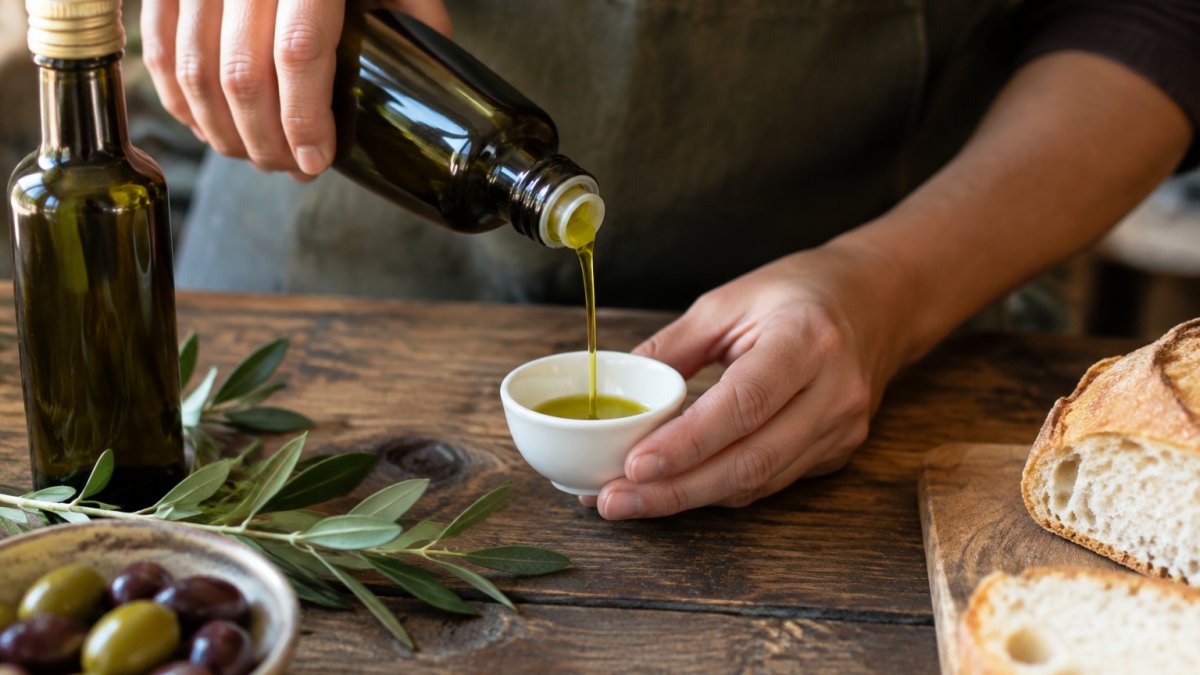
Here's the checklist we'd hand a friend:
- Harvest date, not just a "best by" date. Oil is a fresh product. Look for the year and ideally the month.
- "Extra virgin" and cold-extracted. These describe how the oil was processed.
- Dark glass or tin packaging. Light degrades oil fast.
- A single origin or estate name. Blends hide a lot; a named source doesn't.
- A peppery finish. That catch in your throat is a common characteristic of fresh extra-virgin oil.
A common mistake is trusting a fancy label over a printed harvest date. Another is buying a large bottle that sits half-used for a year. Buy smaller, buy fresher, and taste before you commit. If you want to see what a high-quality bottle looks like in practice, our California Mission Winter Harvest Extra Virgin Olive Oil is a good example of a single-origin oil with a clear, mild character.

Here is the checklist we would hand a friend before buying a bottle.
| What to check | What to look for | Why it matters |
|---|---|---|
| Harvest date | Year and ideally the month | Freshness is the biggest verifiable quality factor |
| Label terms | Extra virgin and cold-extracted | These describe how the oil was processed |
| Packaging | Dark glass or tin | Light degrades oil fast |
| Origin | Single origin or estate name | Blends hide a lot; a named source doesn't |
| Taste | A peppery finish | Common characteristic of fresh extra-virgin oil |
Culinary Uses for Artisanal Olive Oil: Cooking, Finishing, and Storage
Artisanal olive oil earns its keep in two places: the pan and the plate. For cooking, use it for sautéing, roasting, and gentle frying, where its flavor holds up and its smoke point handles everyday heat. For finishing, drizzle it raw over pasta, soups, grilled vegetables, or bread, where the aroma and peppery bite do the work.
Storage is simple but people get it wrong constantly. Keep bottles in a cool, dark cupboard away from the stove, cap them tightly, and use them within a few months of opening. Don't refrigerate unless you want it cloudy and thick; if you do, let it come back to room temperature before using.
If you want to go deeper on cooking with extra-virgin oil, our guide to extra virgin olive oil for frying covers heat, smoke points, and technique in detail.
Choosing Your First Artisanal Bottle at The Oil & Vinegar Bar
The right first bottle depends on how you cook. If you want one oil that does everything, start with a versatile, balanced bottle. If you prefer a bold finish, consider something raw and unfiltered.
Two bottles we'd point a first-time buyer toward:
- Sevillano Extra Virgin Olive Oil, $26.00 for 275ml. Smooth and full-flavored with hints of artichoke and fresh herbs, and versatile for dipping, dressings, and main courses.
- Ambrosia Extra Virgin Olive Oil, $26.00. Raw, unfiltered, and cold-pressed using traditional stone-grinding methods. Green, peppery, and velvety, it suits finishing and dipping.
Best for: home cooks who want a single dependable bottle (Sevillano) or a bold finishing oil (Ambrosia). Skip if: you're looking for a neutral, flavorless oil for baking, since both of these are meant to be tasted.


Watch out: buying a big bottle before you know what you like. Start with a smaller size, taste it, and let your palate guide the next purchase.
The real question is whether the freshness and production standards are worth it to you. At The Oil & Vinegar Bar, we hand-bottle oils from Spain, Tunisia, Greece, and Italy on the Oregon Coast. Explore our selection and decide for yourself.
Frequently Asked Questions
Should you drink a spoonful of olive oil every day?
A daily tablespoon of olive oil is a simple way to add monounsaturated fatty acids to your diet. One tablespoon contains about 120 calories, so it fits best when it replaces other fats rather than adding on top of them. Drizzle it over vegetables, soup, or bread instead of taking it straight if that suits your routine better.
What makes artisanal olive oil different from mass-produced varieties?
Artisanal olive oil is generally produced in smaller batches, and freshness and handling affect flavor over time.
How should I store artisanal olive oil to keep its benefits?
Keep your bottle in a cool, dark cabinet away from the stove, and seal it tightly after each use. Heat, light, and oxygen speed up the breakdown of olive oil and can make it go stale. A 275ml bottle like the Sevillano or Ambrosia from The Oil & Vinegar Bar is a practical size to finish within a few months of opening. If you buy in larger quantities, decant a small working bottle and keep the rest sealed in a dark spot.
Can artisanal olive oil still be used for cooking, or is it only for finishing?
Both. A smooth, versatile bottle like Sevillano Extra Virgin Olive Oil works for bread dipping, salad dressings, and main courses, while a bold unfiltered oil like Ambrosia shines as a finishing drizzle over pasta, soups, or grilled vegetables. Save your most peppery, high-polyphenol bottles for raw uses where the flavor and compounds stay intact, and use milder oils for heat.
