

How to Store Olive Oil for Maximum Freshness
Last Updated: November 1, 2026
Quick Summary
To store olive oil for maximum freshness, keep it in a cool, dark spot away from heat and light, such as a closed pantry or low kitchen cabinet. Use a dark glass, ceramic, or stainless steel container with a tight-fitting cap, and keep the bottle sealed between pours to limit air exposure.
- Aim for a steady, cool storage spot, ideally in the 55-60°F range.
- Skip open pourers and decorative spouts that leave a wide air path.
- Olive oil does not need refrigeration for normal kitchen use.
- Label each bottle with the date you opened it.
- Rancid oil smells waxy or crayon-like and tastes flat and greasy.
Table of Contents
- Step 1: Pick a Cool, Dark Spot Away From Heat and Light
- Step 2: Choose the Best Container for Storing Olive Oil
- Step 3: Seal Bottles Tightly to Limit Air Exposure
- Step 4: Does Olive Oil Need to Be Refrigerated?
- Step 5: Know How Long Olive Oil Lasts After Opening
- Step 6: How to Tell If Olive Oil Is Rancid
- Set Up Your Kitchen for Fresh Olive Oil
- Frequently Asked Questions
Step 1: Pick a Cool, Dark Spot Away From Heat and Light
Heat and light are the two fastest ways to ruin olive oil. So the first rule of how to store olive oil for maximum freshness is simple: find a cool, dark spot far from your stove and away from any window, and store olive oil there rather than anywhere warm or bright. Think of your oil the way you'd think of a good bottle of wine, and treat it accordingly.
Where does that leave you? A closed pantry or a low kitchen cabinet works well. A shelf above the oven does not. Neither does a sunny windowsill, no matter how pretty the bottle looks there.
Watch out: a decorative bottle next to your stovetop exposes oil to steam and burner heat, which speed up oxidation.
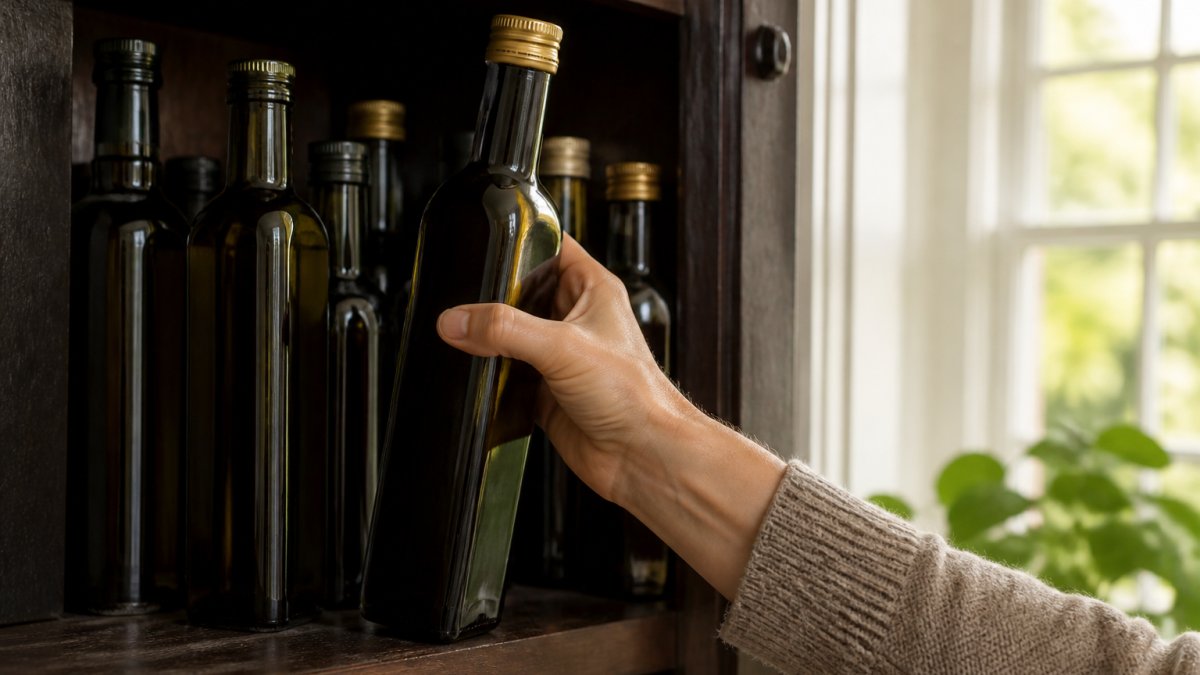
Step 2: Choose the Best Container for Storing Olive Oil
A good container for storing olive oil is dark glass, ceramic, stainless steel, or another opaque vessel with a tight-fitting cap. Light passes through clear glass and can break down the compounds that give oil its fresh, peppery bite. Size matters too: buy a larger supply bottle for backup and decant a small quantity into a daily-use bottle so you open the big one less often. Maintaining this same level of vigilance when storing artisanal condiments ensures that the delicate balance of heat and acidity remains preserved long after the seal is broken.
Here's how container materials compare:
| Container | Protects From Light | Best For | Watch Out For |
|---|---|---|---|
| Dark glass | Yes | Daily-use bottle and short-term backup | Still keep it out of sun; inspect the seal |
| Clear glass | No | Short-term use only, or oil you'll finish in weeks | Light damage is fast; never store near a window |
| Ceramic or opaque | Yes | Countertop storage and gifting | Check the seal quality; some glazes are porous |
| Stainless steel | Yes | Backup supply and bulk storage | Must be food-grade; avoid reactive metals |
| Plastic | Partly | Short trips and picnics only | Can absorb odors over time; not for long-term storage |
A few container rules that matter more than the material label:
- Match bottle size to use rate. A 500 mL bottle you finish in a month beats a 3 L jug you open weekly for a year. Buy the largest size you'll realistically finish within a few months, and split it into smaller sealed bottles for daily pouring.
- Minimize headspace in the daily-use bottle. Air above the oil is oxidation fuel. Choose a bottle that fits your typical pour volume so the oil level stays high, and top it off from the backup supply rather than letting it sit half empty.
- Transfer only when it helps. Moving oil from a clear or plastic supply bottle into dark glass is worth it if the original container lets in light. But every transfer exposes oil to air, so decant once into a clean, dry bottle rather than pouring back and forth.
- Skip open pourers and decorative spouts. They look convenient but leave a wide air path. A screw cap or a tight-fitting stopper is better.
- Label the fill or open date. A strip of masking tape and a marker is enough; it turns "is this still good?" into a quick check.
If you want to see how our oils look in practice, browse our Sevillano Extra Virgin Olive Oil or compare it with our Ambrosia Extra Virgin Olive Oil.


Step 3: Seal Bottles Tightly to Limit Air Exposure
Oxygen is the third enemy, after heat and light. Every time air touches the oil, oxidation starts, and oxidation is what turns fresh oil stale. Keep the cap screwed on tight between pours, and don't leave the bottle open while you cook.
A few habits that help:
- Wipe the lip of the bottle after pouring so residue doesn't go rancid.
- Close the cap immediately, every single time.
- Use a smaller bottle for daily pouring so the big one stays sealed.
- Skip fancy open pourers that leave the oil exposed to air all day.
As the USDA food storage guidance reminds home cooks, limiting air and heat exposure is central to keeping fats fresh. Olive oil is no exception.
Step 4: Does Olive Oil Need to Be Refrigerated?
No, olive oil does not need to be refrigerated for normal kitchen use. Room temperature storage in a dark cupboard is fine for oil you'll finish within a few months. Refrigeration slows aging, but it also makes the oil cloudy and thick, and repeated warming and cooling isn't ideal.
The better approach is temperature control. Aim for a steady, cool spot, ideally in the 55-60°F range if you can manage it. Most kitchens run warmer than that, so do what you can: pick the coolest cabinet, keep oil away from appliances, and store backup bottles in a basement or cool closet.
Sevillano Extra Virgin Olive Oil →
A practical way to split the job:
- Daily-use bottle: keep it in the coolest dark cabinet you have, away from the stove, oven, dishwasher, and any sunny window. A low cabinet on an interior wall usually runs cooler than an upper shelf near the ceiling.
- Backup supply: store sealed bottles in the coolest stable spot available, a basement shelf, a closet floor, or a lower cabinet away from heat sources. Stable temperature matters more than hitting an exact number.
- Warm kitchens and seasonal heat: in summer or in a kitchen that regularly runs above the mid-70s°F, move backup bottles to the coolest room you have and consider refrigerating only the backup supply, not the daily bottle. Let refrigerated oil come to room temperature before tasting so cloudiness and thickness don't skew your impression.
- Avoid temperature swings: a spot that alternates between hot and cold ages oil faster than a slightly warmer but steady spot. Don't store oil on top of the fridge, beside the oven, or in a car.
If your oil does turn cloudy in the fridge, don't panic. That cloudiness is harmless and clears up as the oil warms.
Step 5: Know How Long Olive Oil Lasts After Opening
Olive oil is generally best used within a limited window after opening, and freshness fades over time. Check the harvest or best-before date on every bottle. Freshness fades gradually, so the flavor you taste at month one won't match month twelve. Buy in quantities you'll actually use, and check the harvest or best-before date on every bottle.
Our California Mission Winter Harvest Extra Virgin Olive Oil is mild and buttery, and is best enjoyed fresh.

Step 6: How to Tell If Olive Oil Is Rancid
Rancid olive oil smells and tastes wrong. Look for a waxy, crayon-like aroma, a greasy mouthfeel, or a flat flavor with none of the peppery finish fresh oil should have.
A quick checklist for spotting oxidation:
- Smell it: stale, cardboard, or crayon notes mean trouble.
- Taste it: a dull, greasy finish with no bite is a red flag.
- Look at it: extreme cloudiness or sediment in an old bottle warrants a sniff test.
- Compare it: taste a new bottle beside the old one if you're unsure.
When in doubt, trust your nose.
Set Up Your Kitchen for Fresh Olive Oil
A good storage setup takes about ten minutes. Here's how we'd do it:
- Clear one low, dark cabinet shelf for daily-use oil.
- Move backup bottles to the coolest spot you have.
- Decant a small bottle for pouring and keep the rest sealed.
- Label each bottle with the date you opened it.
- Do a monthly smell test on anything open.
Once your oil is stored right, put it to work. Our guide to extra virgin olive oil for frying covers how to use it in the kitchen.
Frequently Asked Questions
Can olive oil last 20 years?
No. Olive oil is not a long-term aged product like wine. Olive oil is best used within a limited period after harvest, and quality declines after opening. Even unopened oil stored in ideal conditions will lose its fresh flavor and aroma over a few years. For maximum freshness, buy quantities you will use within a few months and store them in a cool, dark cupboard.
Is it better to store olive oil in glass or plastic?
Dark glass is the best container for storing olive oil because it blocks light and does not react with the oil. Clear glass lets light in, which speeds oxidation. Plastic can allow oxygen to pass through over time and may absorb odors. If you buy a large plastic jug, transfer the oil to a smaller dark glass bottle for daily use and keep the rest sealed in a cool, dark place.
Do I need to refrigerate olive oil after I open it?
Refrigeration is not required, but it can help in warm kitchens. The ideal storage temperature is around 55 to 60°F. If your kitchen regularly gets above 75°F, move the bottle to the fridge. Cold oil may turn cloudy or solidify, which is normal; let it sit at room temperature for a few minutes before use. Always keep the cap tightly sealed.
How can you tell if olive oil has gone bad?
Signs of rancidity include a smell like old nuts, crayons, or wet cardboard, a flat or greasy taste, and a lack of the peppery kick fresh oil has. If the oil smells off or tastes stale, discard it. Proper storage in a dark glass bottle, kept cool and tightly sealed, slows oxidation and helps you avoid waste.
Good olive oil deserves better than a sunny shelf above the stove. The Oil & Vinegar Bar bottles handcrafted oils from Spain, Tunisia, Greece, and Italy right here on the Oregon Coast, so you get depth and purity in every bottle. Explore our curated selection, store it cool and dark, and taste the difference fresh oil makes. Get started with The Oil & Vinegar Bar and elevate every meal you make.
