

Is a Spoonful of Olive Oil a Day Good for You?
Table of Contents
- What a Daily Spoonful of Olive Oil Actually Does
- Extra Virgin Olive Oil Health Benefits Backed by Research
- How Much Olive Oil a Day Is Actually Enough
- The Best Time to Take Olive Oil (and When It Doesn't Matter)
- How to Choose High-Quality Olive Oil at the Store
- Raw vs. Cooked: Getting the Most From Every Spoonful
- Who Should Skip the Daily Spoonful
- Frequently Asked Questions
Last Updated: October 2, 2026
What a Daily Spoonful of Olive Oil Actually Does
A daily spoonful of olive oil is a concentrated dose of fat-soluble nutrients and plant compounds, not a magic bullet. This guide from The Oil & Vinegar Bar breaks down what that tablespoon actually delivers, who benefits most, and how to choose a bottle worth taking daily.
The habit has real physiological effects, but they depend on what's in the bottle. A fresh, cold-pressed extra virgin olive oil carries polyphenols, vitamin E, and monounsaturated fats in a form your body can use. A refined or old bottle delivers mostly plain fat.

What One Tablespoon Actually Contains
A tablespoon of extra virgin olive oil is about 119 calories and 13.5 grams of fat. Nearly all of that fat is unsaturated:
- Oleic acid (monounsaturated): roughly 9 to 10 grams, the dominant fatty acid and the one most studied for cardiovascular effects
- Linoleic acid (polyunsaturated omega-6): about 1 gram
- Alpha-linolenic acid (omega-3): a small fraction of a gram
- Saturated fat: about 2 grams
That fat profile is the reason olive oil behaves differently from butter or coconut oil in the body. It also carries the fat-soluble micronutrients:
- Vitamin E: roughly 1.9 mg per tablespoon, about 13% of the daily value, mostly as alpha-tocopherol
- Vitamin K: about 8 mcg per tablespoon, which matters for anyone on blood thinners (more on that below)
- Vitamin A precursors and plant sterols: present in small but measurable amounts
The Compounds Behind the Claims
Extra virgin olive oil is the unrefined juice of the olive fruit, pressed without heat or chemical treatment. That minimal processing is what preserves the compounds researchers keep pointing to.
The main players:
- Monounsaturated fats, primarily oleic acid, which support a healthy lipid profile
- Polyphenols, antioxidant compounds linked to lower oxidative stress and inflammation
- Vitamin E and vitamin K, both fat-soluble and better absorbed alongside dietary fat
- Plant sterols, which can influence cholesterol absorption
Polyphenols deserve a closer look because they are what separates a good bottle from a mediocre one.
- Oleuropein and its derivatives (oleocanthal, oleacein): oleocanthal is the compound behind the peppery sting at the back of your throat; it behaves similarly to ibuprofen in lab studies, which is one reason fresh oil feels "hot"
- Hydroxytyrosol and tyrosol: smaller phenols absorbed more readily into the bloodstream
- Lignans and flavonoids: present in lower amounts but part of the overall antioxidant load
Why Freshness Changes the Math
What most people miss is that these compounds degrade. Heat, light, and time all reduce polyphenol content, which is why a bottle's harvest date matters more than its label design. A two-year-old bottle that was excellent at pressing may deliver a fraction of the polyphenols it started with, the fat is still there, but the antioxidant payload that justifies the daily habit has faded.
Extra Virgin Olive Oil Health Benefits Backed by Research
Extra virgin olive oil health benefits center on cardiovascular support, inflammation, and metabolic health. The strongest evidence comes from studies of Mediterranean-style eating patterns, where olive oil replaces saturated fats rather than adding to them.
Heart Health and Cholesterol
Replacing saturated fat with olive oil supports a healthier lipid profile, including lower LDL cholesterol and better HDL function. According to the American Heart Association's dietary fat guidance, unsaturated fats like those in olive oil should replace saturated fats in a heart-healthy eating pattern.
Inflammation, Digestion, and Weight
Polyphenols in extra virgin olive oil are associated with reduced markers of inflammation and oxidative stress. For digestive health, olive oil can support gastrointestinal function and help the body absorb fat-soluble vitamins from vegetables.
How Much Olive Oil a Day Is Actually Enough
For most adults, one to two tablespoons of olive oil daily is a reasonable target, with one tablespoon (about 120 calories) being the common starting point. That amount fits within a balanced eating pattern and delivers meaningful polyphenols without crowding out other nutrients.
A few practical benchmarks:
Ambrosia Extra Virgin Olive Oil →
- 1 tablespoon: baseline daily intake, roughly 120 calories and 13.5 g fat
- 2 tablespoons: upper end for most home cooks, split across meals
- More than 3 tablespoons: fine if it replaces other fats, but watch total calories
Why the Range Exists
The one-to-two-tablespoon window is not arbitrary. It reflects two competing pressures:
- Below one tablespoon, you get some monounsaturated fat but very little polyphenol exposure, the antioxidant dose that most of the research interest is built on
- Above two tablespoons, the calories add up fast: three tablespoons is roughly 360 calories, which is a meaningful share of a typical daily intake for many adults
The Swap, Not the Add-On
The single most useful way to think about dosage is as a replacement, not a supplement. If you are already cooking with butter, spreading mayonnaise, or dressing salads with a seed-oil blend, trading those for extra virgin olive oil is where the benefit shows up. Adding a spoonful on top of an unchanged diet mostly adds calories.
Who Should Adjust the Number
Dosage is not one-size-fits-all. A few groups should treat the standard range as a starting point for a conversation with a clinician, not a prescription:
- Anyone on blood-thinning medication (warfarin, apixaban, rivaroxaban): the vitamin K in olive oil can interact with these drugs, and a sudden jump from zero to two tablespoons daily is exactly the kind of change that shifts INR. Consistency matters more than the absolute amount.
- People with a history of gallstones or gallbladder disease: fat triggers gallbladder contraction, and a concentrated spoonful on an empty stomach can provoke pain in susceptible individuals.
- Anyone with fat-malabsorption conditions (pancreatic insufficiency, certain forms of inflammatory bowel disease, post-bariatric surgery): a concentrated fat dose may not be well tolerated and should be introduced gradually.
- People managing weight closely: the calorie math above is the whole story, count the spoonful within your daily total rather than treating it as free.
A Practical Starting Protocol
For a healthy adult with no relevant conditions, a reasonable approach is:
- Week 1-2: one tablespoon daily, taken with a meal
- Week 3 onward: add a second tablespoon if it is replacing another fat source and your total calories allow it
- Ongoing: keep the amount steady, keep the bottle fresh, and revisit if your medications or health status change
The Best Time to Take Olive Oil (and When It Doesn't Matter)
The best time to take olive oil is with a meal, because dietary fat improves absorption of fat-soluble vitamins and polyphenols. Beyond that, timing is mostly preference.
How to Choose High-Quality Olive Oil at the Store
The single best indicator of quality is a harvest date, not a "best by" date. Freshness drives flavor and polyphenol content, and most bottles are best within 12 to 18 months of harvest.
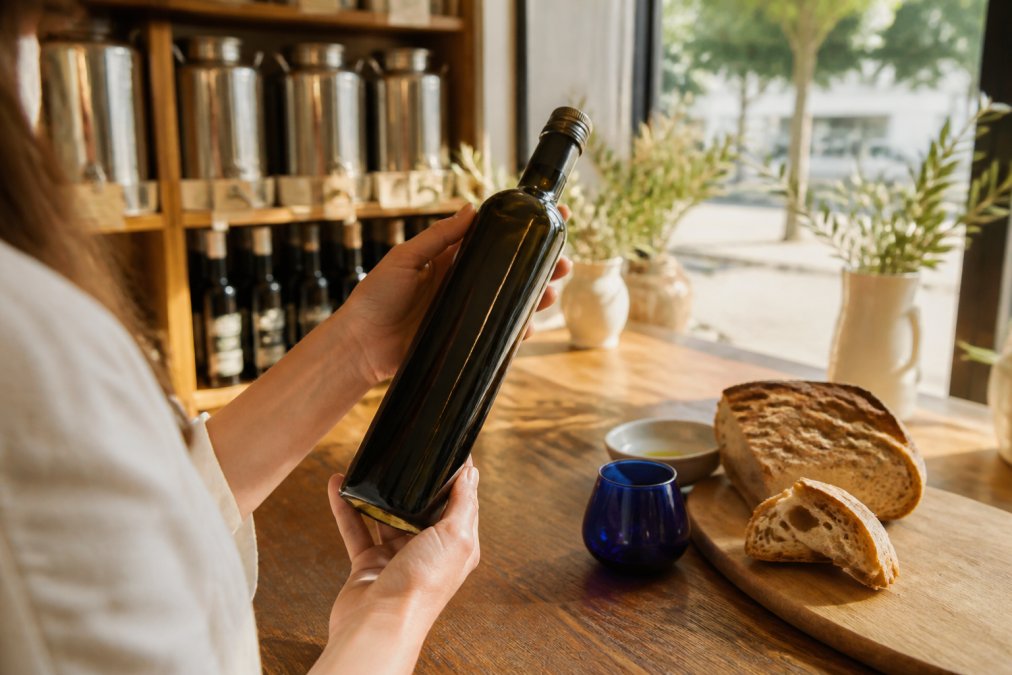
Look for these quality indicators:
- "Extra virgin" on the label, meaning unrefined and cold-pressed
- A harvest date, ideally within the past year
- Dark glass or a tin, which protects against light damage
- A single origin or region, which tends to signal smaller, fresher batches
- A peppery finish, the tingle at the back of your throat that signals fresh polyphenols
Raw vs. Cooked: Getting the Most From Every Spoonful
Raw and cooked olive oil serve different purposes. Raw, cold-pressed oil keeps its polyphenols and peppery character, making it ideal for finishing, dipping, and dressings. Cooking with olive oil is still worthwhile, especially at moderate heat, though some delicate compounds degrade.
Who Should Skip the Daily Spoonful
Not everyone should make a daily spoonful a habit. Olive oil is calorie-dense, so anyone managing weight closely should count it within their daily total rather than adding it on top.
Frequently Asked Questions
Should I take a spoonful of olive oil in the morning or at night?
Either works. Some people prefer a morning spoonful on an empty stomach, while others take it with dinner. What matters most is consistency and total daily intake, not the clock. If you take certain medications or have reflux, ask your doctor about timing. A reasonable target is around one to two tablespoons of extra virgin olive oil per day, folded into meals rather than gulped straight.
Will olive oil burn belly fat?
No single food burns fat, and olive oil is calorie-dense at roughly 120 calories per tablespoon. What research does suggest is that monounsaturated fats and polyphenols in extra virgin olive oil support satiety and metabolic health when they replace less healthy fats in your diet. Think of it as a swap, not a supplement. Replacing butter or processed oils with olive oil can help with weight management over time.
Are there any side effects to consuming olive oil daily?
For most people, a daily spoonful is well tolerated. Eating large amounts can cause loose stools or digestive discomfort because fat slows stomach emptying. People with gallstones or a history of pancreatitis should talk to a doctor before adding a daily spoonful. Because olive oil can slow blood clotting slightly, anyone on blood thinners should check with their physician about how much is safe.
Which is better, 100% olive oil or extra virgin olive oil?
Extra virgin olive oil is the better choice for daily consumption. It is cold-pressed and unrefined, so it retains the polyphenols, vitamin E, and vitamin K that give olive oil its health benefits. Regular olive oil is refined, which strips many of those compounds. Look for bottles labeled extra virgin, ideally with a harvest date, and store them away from heat and light to protect the flavor and nutrients.
A daily spoonful of olive oil only pays off if the oil is fresh and genuinely extra virgin. The Oil & Vinegar Bar hand-bottles a curated range of cold-pressed oils, including the raw, unfiltered Ambrosia and the smooth, award-winning Sevillano, so you can build a daily habit around a bottle worth the ritual. Browse the collection and find the oil that fits your table.