

What Cardiologists Say About Olive Oil and Heart Health
Last Updated: October 30, 2026
Quick Summary
Cardiologists recommend olive oil mainly because it replaces saturated fats like butter and lard, and that swap improves cardiovascular risk factors. A common recommendation is about one to two tablespoons per day, used in place of other fats rather than added on top. Extra-virgin olive oil is generally favored for its polyphenols.
- One tablespoon of olive oil carries about 120 calories, and one cup roughly 1,900.
- Trade cooking butter for olive oil at roughly a one-to-one volume ratio when sautéing and roasting.
- Extra-virgin olive oil is cold-pressed and unfiltered, preserving polyphenols and antioxidants.
- Look for a harvest date and prefer oils within 12 to 18 months of pressing.
- Store olive oil in a cool, dark cabinet away from the stove and heat.
Table of Contents
- Olive Oil and Heart Health: The Cardiologist's Perspective
- Daily Olive Oil Intake: How Much Do Cardiologists Suggest?
- Olive Oil and Cholesterol: What the Research Shows
- Cooking with Olive Oil: Heat, Smoke Point, and Everyday Use
- Extra-Virgin vs. Regular Olive Oil: Which Do Cardiologists Prefer?
- Choosing and Storing Olive Oil for Heart Health
- Who Should Seek Individualized Advice
- Find Your Next Heart-Healthy Bottle at The Oil & Vinegar Bar
- Frequently Asked Questions
Olive Oil and Heart Health: The Cardiologist's Perspective
Olive oil is often described as a preferred everyday fat for heart health, largely because it is rich in monounsaturated fat and can replace saturated fat in the diet. This guide breaks down what heart-health guidance says about olive oil, how strong the evidence really is, and how to use it well. The short version: olive oil earns its reputation, but not for the reasons most labels suggest. Below, we explain what heart-health guidance generally recommends, how much is commonly suggested, and where the research gets murky.
Why Cardiologists Recommend Olive Oil
The case rests on substitution, not addition. Cardiologists recommend olive oil because it displaces saturated fat like butter and lard, and that swap improves cardiovascular risk factors. The American Heart Association's dietary fat guidance treats monounsaturated fat as a sound replacement for saturated fat in a heart-healthy eating pattern. Olive oil also anchors the Mediterranean diet, the eating pattern most consistently linked with lower heart disease risk in large observational studies.
How to Interpret Conflicting Evidence
Headlines swing between "olive oil prevents heart attacks" and "olive oil is just fat." Both oversell the science. Most olive oil research is observational, meaning it tracks people who already eat olive oil and compares their outcomes. That shows association, not causation. A person who cooks with olive oil may also eat more vegetables, exercise more, and smoke less. Similar nuances apply when evaluating the evidence for fish oil, where the benefits of isolated supplementation often fail to replicate the complex health outcomes observed in those who consume whole foods.
Daily Olive Oil Intake: How Much Do Cardiologists Suggest?
Cardiologists rarely hand out a single number, because the right amount depends on what the olive oil replaces. Still, a common recommendation is about one to two tablespoons per day, used in place of other fats rather than added on top of them.
What matters more than hitting an exact tablespoon count is the pattern: a steady daily intake that displaces butter, margarine, shortening, or processed seed oils.
Calories and Food Substitution
Olive oil is calorie-dense, so quantity is real. One tablespoon carries about 120 calories, and one cup carries roughly 1,900. Adding olive oil on top of your normal diet, without removing anything, adds calories without the benefit. The heart-health gain comes from the swap.
Concrete substitutions that preserve the benefit:
- Trade your cooking butter for olive oil at roughly a one-to-one volume ratio in sautéing and roasting.
- Dress your salad with olive oil and vinegar instead of bottled ranch or creamy dressings.
- Drizzle olive oil over vegetables instead of finishing them with butter.
- Use olive oil in place of margarine or shortening in baking where the recipe allows.
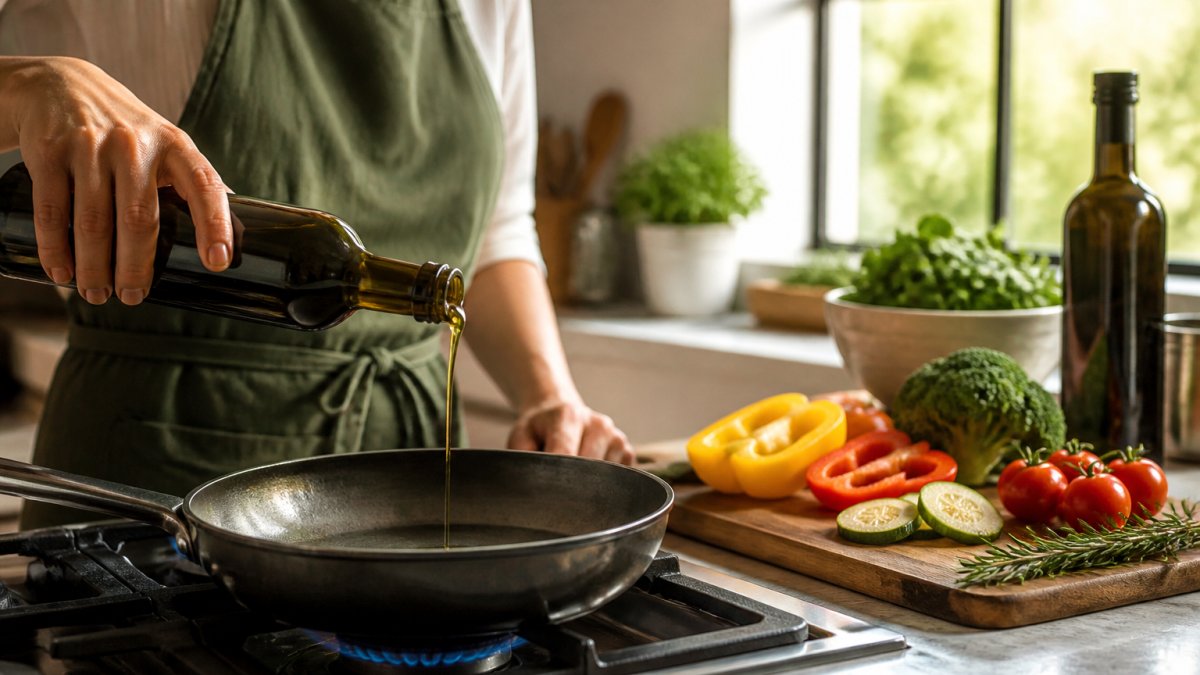
A useful mental model: one tablespoon of olive oil is about the amount that fits in a single thumb tip to first knuckle, or a small pour that coats the bottom of a 10-inch skillet.
Serving Examples That Hit the Range
- Breakfast: one tablespoon of extra-virgin olive oil drizzled over whole-grain toast or stirred into oatmeal in place of butter.
- Lunch: one tablespoon whisked into a vinaigrette for a large salad.
- Dinner: one tablespoon used to sauté vegetables or finish a piece of fish, replacing the butter or margarine you would have used.
That pattern lands in the one-to-two tablespoon range without stacking oil on top of an already high-fat meal. If you are eating out or using prepared foods, remember that restaurant and packaged foods often already contain added oils, so your home pour may need to be smaller to stay in range.
Olive Oil and Cholesterol: What the Research Shows
Olive oil's most reliable effect is on cholesterol, specifically by improving the balance of fats in the blood when it replaces saturated fat. Diets higher in monounsaturated fat tend to lower LDL cholesterol, the "bad" kind, and maintain or raise HDL, the "good" kind, compared with diets heavy in saturated fat. The National Institutes of Health's overview of monounsaturated fats notes that replacing saturated fat with unsaturated fat supports healthier blood cholesterol levels.
Cooking with Olive Oil: Heat, Smoke Point, and Everyday Use
A common worry is that heating olive oil destroys its benefits or creates harmful compounds. Regular olive oil and extra-virgin olive oil both handle normal home cooking well, including sautéing and light frying. If you want the full method, read our guide on extra virgin olive oil for frying.
Sevillano Extra Virgin Olive Oil →
Extra-Virgin vs. Regular Olive Oil: Which Do Cardiologists Prefer?
Extra-virgin olive oil is the better choice for heart health, and cardiologists generally favor it. The difference is processing. Extra-virgin is cold-pressed and unfiltered in a way that preserves polyphenols and antioxidants, the compounds linked to vascular and anti-inflammatory benefits. Regular olive oil is refined, which raises its smoke point but reduces much of that polyphenol content. Both are heart-healthy fats. The extra-virgin bottle simply delivers more of the compounds that make olive oil interesting beyond its fat profile.
The two main types differ mainly in how they are processed, which shapes what they deliver beyond fat.
| Type | Processing | Key difference |
|---|---|---|
| Extra-virgin olive oil | Cold-pressed and unfiltered | Preserves polyphenols and antioxidants; cardiologists generally favor it |
| Regular olive oil | Refined | Raises smoke point but reduces polyphenol content |
| Both | Heart-healthy fats | Extra-virgin delivers more beneficial compounds |
Choosing and Storing Olive Oil for Heart Health
Freshness drives both flavor and polyphenol content, and most shoppers ignore it. A cardiologist will tell you the fat profile is similar across olive oils, but the polyphenols and antioxidants that make extra-virgin interesting degrade with age, heat, light, and air. That means how you buy and store the bottle matters as much as which bottle you pick.
Reading the Label
- Look for a harvest date, not just a "best by" date. Harvest date tells you when the fruit was pressed; best-by dates can be years out and say little about freshness. Prefer oils from the most recent harvest, ideally within 12 to 18 months of pressing.
- Check the grade. "Extra-virgin" means cold-pressed and meets a higher standard for acidity and sensory quality. "Regular" or "light" olive oil is refined, which raises the smoke point but strips much of the polyphenol content.
- Prefer dark glass or tins. Light degrades oil, so clear bottles on a sunny shelf are a warning sign.
- Origin and blending. Single-origin oils are easier to trace; blends can be fine but vary more in quality. Neither guarantees freshness, so the harvest date still matters most.
Quality Indicators You Can Taste
A peppery, slightly bitter finish is a good sign: it usually signals fresh polyphenols. If your oil tastes flat, greasy, or slightly rancid, it has likely faded or oxidized. Those sensory cues are not just about flavor; they track with the compounds that make extra-virgin worth choosing.
Storing for Shelf Life
- Store your bottle in a cool, dark cabinet, away from the stove and any heat source.
- Keep the cap tight; oxygen speeds degradation.
- Use it within a few months of opening for best flavor and polyphenol content.
- Buy smaller bottles if you do not use olive oil daily, so you finish it while it is still fresh.
Matching the Bottle to the Job
A practical approach many cardiologists and dietitians suggest: keep an extra-virgin bottle for finishing, dressing, and gentle cooking, and a refined olive oil for high-heat frying where you want a neutral flavor and a higher smoke point. That way you get the polyphenols where they matter and the heat stability where you need it. If you want the full method, read our guide on extra virgin olive oil for frying.
Who Should Seek Individualized Advice
General guidance does not fit everyone. Talk to your doctor before making big dietary changes if you have existing heart disease, take cholesterol or blood-thinning medication, or manage diabetes. People with a history of pancreatitis or gallbladder issues should also get personalized advice on fat intake. And anyone with food allergies or specific dietary restrictions deserves a plan built for them, not a generic one. Olive oil is a strong default for most people, but a cardiologist who knows your history can tailor the amount and the role it plays in your diet.
Find Your Next Heart-Healthy Bottle at The Oil & Vinegar Bar
Good oil starts with good sourcing, and that is where we come in. At The Oil & Vinegar Bar, we offer a curated selection of olive oils from Spain, Greece, Italy, and Tunisia, bottled by hand on the Oregon Coast. If you want a versatile everyday pour, our Sevillano Extra Virgin Olive Oil is smooth and grassy, ideal for dressings and finishing. For a bolder, raw, unfiltered option, try our Ambrosia Extra Virgin Olive Oil, cold-pressed with traditional stone methods. And for a buttery, mild character, our California Mission Winter Harvest Extra Virgin Olive Oil is a lovely finishing oil.


Frequently Asked Questions
How much olive oil should a heart patient take daily?
Most cardiologists suggest about 1 to 2 tablespoons (15-30 mL) per day, often as a replacement for butter or other saturated fats. This amount fits within a Mediterranean-style eating pattern and provides monounsaturated fat without adding excessive calories. Rather than drinking it straight, use it to cook vegetables, dress salads, or finish dishes. If you have heart disease or take medications, discuss your total fat intake with your doctor before making significant changes.
Does extra-virgin olive oil offer more heart benefits than regular olive oil?
Extra-virgin olive oil is minimally processed and retains more polyphenols and antioxidants than regular or refined olive oil. These compounds may contribute to inflammation reduction and vascular function. Cardiologists often recommend extra-virgin as the first choice for both cooking and finishing when possible. That said, regular olive oil still provides monounsaturated fat and remains a healthier choice than butter or tropical oils. The best option is the one you enjoy and use consistently.
Can cooking with olive oil at high heat damage its heart-healthy properties?
Extra-virgin olive oil has a smoke point around 350-410°F, which is suitable for most home cooking, including sautéing and roasting. Research suggests the polyphenols in extra-virgin olive oil help protect it from oxidation during heating, making it more stable than once thought. For deep-frying at very high temperatures, refined olive oil may be a better choice. Avoid reusing oil multiple times, and store it away from light and heat to preserve quality.
Is a spoonful of olive oil a day good for you?
A daily spoonful of olive oil can be part of a heart-healthy diet, but it is not a magic bullet. Cardiologists emphasize overall dietary patterns, such as the Mediterranean diet, over single ingredients. One tablespoon provides about 120 calories, so it should replace other fats rather than add extra calories. Observational studies link olive oil consumption to lower cardiovascular risk, but clinical trials show modest effects on cholesterol. Use it as a flavorful replacement for less healthy fats.
Heart-healthy eating does not have to be bland or complicated. The right oil makes the swap easy and the food better. Explore the full collection at The Oil & Vinegar Bar and find a bottle that earns a permanent spot by your stove.
